I have carried the Vortex Crossfire II 4-12x44 on my .308 for two full seasons now, through Idaho rain, Montana snow, and more logging-road dust than I care to count. I bought it for one reason: I needed glass that would hold zero and let me see a deer at dawn without spending what a good used truck costs. Two seasons later, I can tell you exactly what it does well, what it does not, and the three things I wish somebody had told me before I bought it.
This is not a lab test. I am a county road maintenance foreman, not a gun writer. I sight in at a gravel pit range outside town, hunt public land in the Idaho panhandle and western Montana, and my typical shot is 50 to 300 yards. If you are a working hunter on a real budget, this review is for you. If you are shopping for a premium scope, go read something else, because this one is not that, and it does not pretend to be.
The Quick Verdict
The best budget scope I have owned, with honest limits. Buy it for the clarity, the warranty, and the dead-hold reticle. Know that the turrets are mushy, the eye box is picky at 12x, and the magnification ring needs a gloved hand in cold rain.
Amazon Check Today's Price →The scope I trusted on a 300-yard elk shot in a cold October rain
Two seasons, one .308, zero lost zero. If you want the same glass on your rifle, check today's price on Amazon and read what 1,400+ hunters have said.
Amazon Check Today's Price on Amazon →How I've Used It
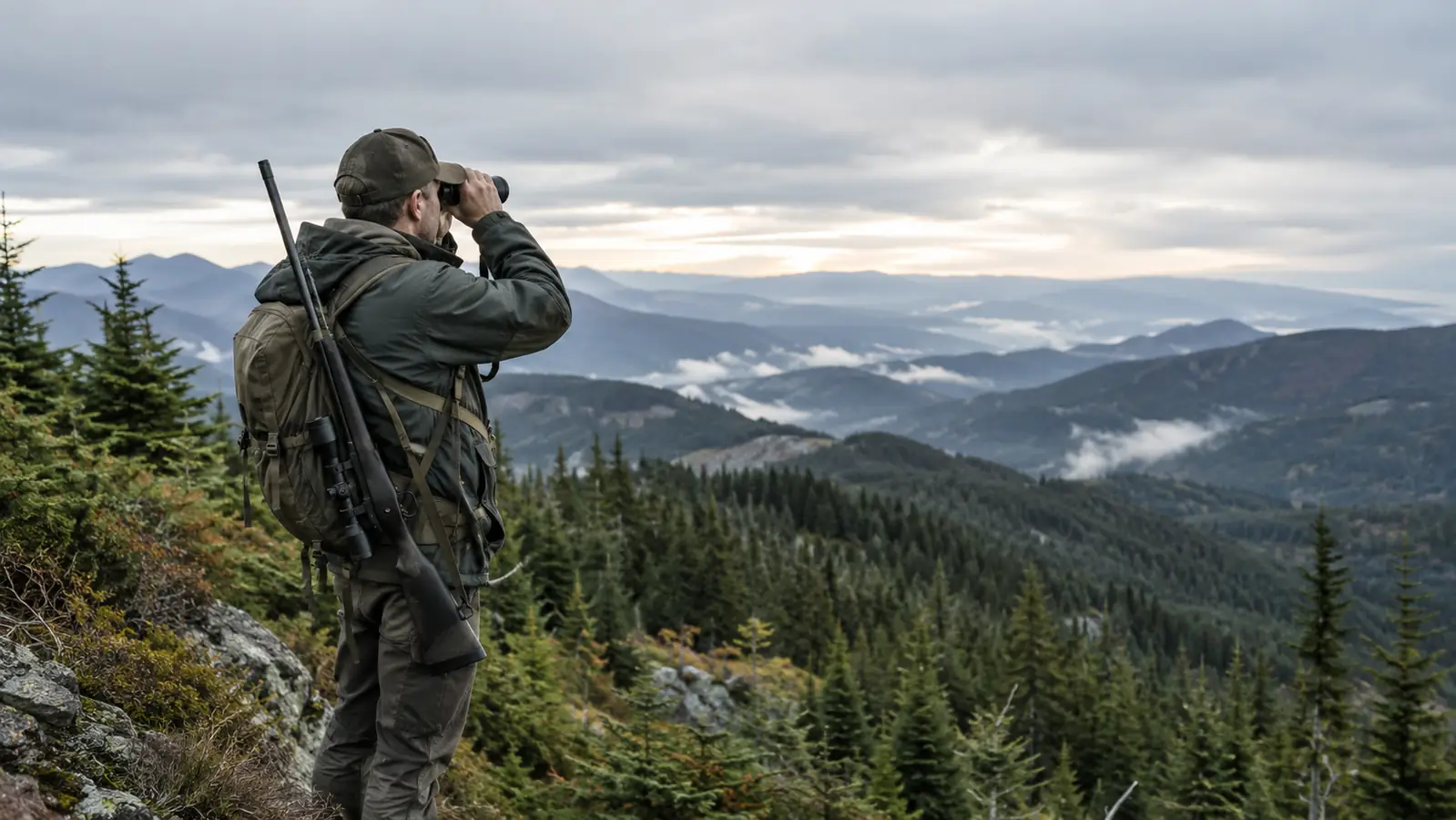
The Crossfire II has been on my .308 since September of the year before last. I mounted it with a set of Vortex rings, torqued everything to spec, and have not touched the base screws since. The rifle rides in a soft case in the back of my truck, gets bounced down two-track roads, and sits in a cold gun cabinet between hunts. It has been rained on, snowed on, and once spent a full day strapped to an ATV rack in a sleet storm. That day was a late October mule deer hunt up a logging cut outside Priest Lake. The sleet started around noon and did not quit until dark. By the time I got back to the truck, the scope was wet to the lens caps and the rifle had taken three solid hits against the rack on the way down a rock shelf. I wiped the scope dry with my sleeve, checked the reticle against a fence post, and nothing had moved. That is the test that matters to me, because that is how I actually hunt.
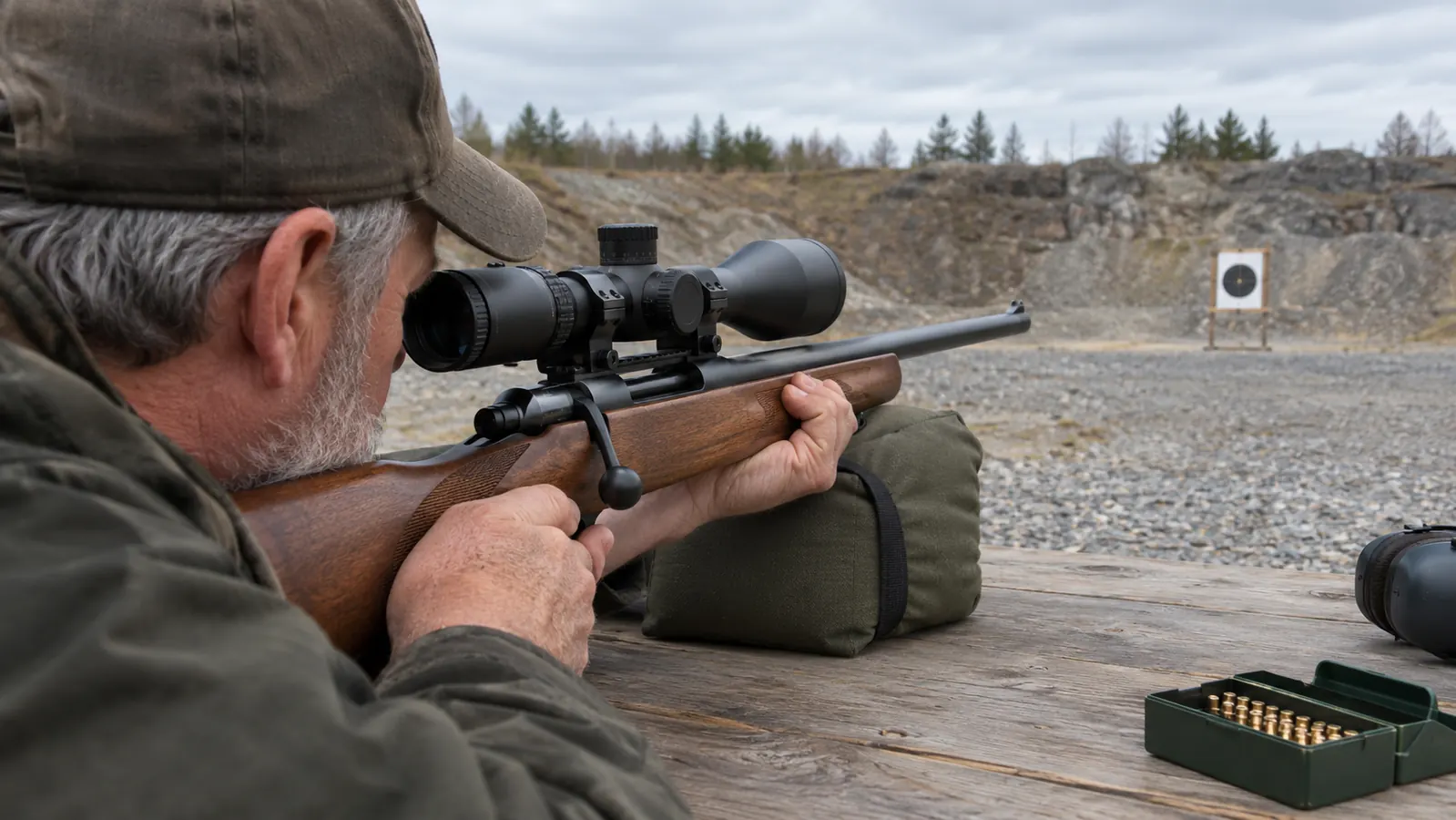
I have put somewhere north of 400 rounds through the rifle with this scope on it, most of them at the gravel pit range, a handful at game. My usual routine is three shots at 100 yards to confirm zero, three at 200 to confirm the first Dead-Hold dot, and one cold-barrel shot at the steel plate if the berm is dry. I keep a spiral notebook in the truck and write down where every group lands. After two seasons, the notebook tells the same story: the crosshair sits where it sat the day I mounted it. In two years, the Crossfire II has not shifted. Not once. The windage and elevation settings are still exactly where I left them, and the reticle still sits dead center at 100 yards.
The glass is the part that surprised me. For the money, the Crossfire II is genuinely clear. At 4x in the timber, I can pick out a deer's shoulder through brush at first light. At 12x on the 200-yard berm, I can see the individual staples holding the target paper. It is not a premium scope, and if you put it side by side with one you will see the difference in low light. But for a working hunter, the difference is smaller than the price difference, and that is the whole point.
What Nobody Tells You Before You Buy
Here is the honest part, and it is the part the product page leaves out. The turrets on the Crossfire II are mushy. They are capped, which is good, because you will not bump them in the truck. But when you click them, there is no crisp detent. You feel a soft thud instead of a positive click. I spent the first month convinced something was wrong. One afternoon I clicked the elevation turret four clicks and the group moved, but the click felt like pushing a button on a worn-out TV remote. A buddy who shoots competition told me to stop messing with it, set zero, and leave it alone. That is what I have done since, and it has cost me nothing. For a hunter who sets zero once and leaves it, that is fine. For a shooter who dials elevation for long range, it is a real frustration, and I wish I had known before I bought it.
The second thing nobody tells you: the eye box gets picky at 12x. At 4x, you can be sloppy with cheek weld and still see the full picture. Crank it to 12x and you have maybe an inch of forgiveness. Miss it and you get a black ring around the edge of the image. The first time I shot at 12x from a field position, I thought the scope was broken. I was prone on a wet logging road, a buck had been standing at 280 yards, and all I saw through the glass was a black crescent. I dropped the rifle, checked the lens, checked the mount, and finally realized I had shifted my cheek an inch off the stock. I have learned to mount the rifle the same way every time, and it is a non-issue now. But it took me a season to figure that out.
The third thing: the magnification ring is stiff when it is cold. In a warm house it turns with one finger. At 20 degrees with rain on the lens, it needs a gloved hand and a firm grip. I found this out on a November morning when a buck came through a cut at 7:40 and I tried to crank from 4x to 8x with one finger. The ring did not budge. I got the shot off at 4x and made it work, but I told myself right then to set magnification before I left the truck. If I am in the timber, it stays at 4x. If I am on a logging cut, it goes to 8x and stays there. That works for me. It would not work for a hunter who needs to dial from 4x to 12x in the middle of a stalk.
What I Liked
- Holds zero through rain, snow, and hard bumps; two seasons and 400 rounds without a shift
- Genuinely clear glass for the money, especially at 4x in the timber
- Dead-Hold BDC reticle keeps your eye on the animal for 200 to 400 yard shots
- Lifetime warranty that follows the scope, not the original owner
- Argon purged and O-ring sealed; never fogged in two seasons
Where It Falls Short
- Turrets are mushy with no crisp detent, frustrating for shooters who dial on every shot
- Eye box gets picky at 12x; miss your cheek weld and you get a black crescent
- Magnification ring is stiff in cold rain and needs a gloved hand
- Low light performance trails premium glass in the last minutes of legal light
- Second focal plane reticle means hold points are only accurate at full magnification
Two seasons, 400 rounds, one hard bump off an ATV rack, and the Crossfire II has not lost zero once. That is the whole review in one sentence.
The Dead-Hold Reticle, Explained in Plain Words
The Dead-Hold BDC reticle is the feature that scares off first-time buyers, so let me explain it the way I would at the kitchen table. The crosshair has a series of dots below the center. Each dot is a hold point for a specific distance, assuming your rifle is zeroed at 100 yards and you are shooting a common cartridge like a .308 or .243. With my .308 and a 100-yard zero, the first dot down is roughly my 200-yard hold, the second is roughly 300, and the third is roughly 400. I say roughly because every rifle and every load is a little different. My rifle shoots a 165-grain bullet, and my notebook says the second dot lands within two inches of center at 290 yards. A friend with a .243 found his holds a full dot different at the same distances. You have to confirm your own drops at the range, not trust the dots blindly.
What the reticle does for me is simple: it keeps my eye on the animal instead of reaching for a turret. When a buck steps out at 250 yards in the timber, I do not have time to dial. I put the second dot on his shoulder and squeeze. The day it paid off was a cold October evening. A bull stepped out at 300 yards with four minutes of legal light left. I did not touch a turret. I put the second dot on his shoulder and squeezed. He went down in sight. That is the whole value of the Dead-Hold reticle, and it is why I chose this scope over a plain duplex. If you shoot one load and one rifle, the dots become second nature after a season. If you switch loads or rifles, you have to re-learn them, which is the tradeoff nobody mentions.
One more honest note: the reticle is in the second focal plane. That means the dots stay the same size no matter what magnification you are on, and the hold points are only correct at the magnification the manufacturer designed them for, which is the highest one. At 4x, the dots are still there, but they do not represent the same distances. I keep the scope at 12x when I am using the dots, and I know my holds. If that sounds complicated, it is not. It is just something to know before you buy, because nobody puts it on the box.
Low Light, Rain, and the Fog Test
The biggest worry any hunter has about a budget scope is fog. I have owned cheap scopes that turned into frosted glass the moment the temperature dropped. The Crossfire II is argon purged and O-ring sealed, which is the spec-sheet way of saying it is filled with a gas that will not condense. In two seasons, it has never fogged on me. The morning that sold me was an 18-degree opener in November. The truck cab was warm, the air outside was cold and wet, and the scope came out of the case fog-free while my buddy's cheap scope took ten minutes to clear. Not in a 20-degree rain, not coming out of a warm truck into a cold morning, not after a full day in a sleet storm. That alone is worth the money to me.
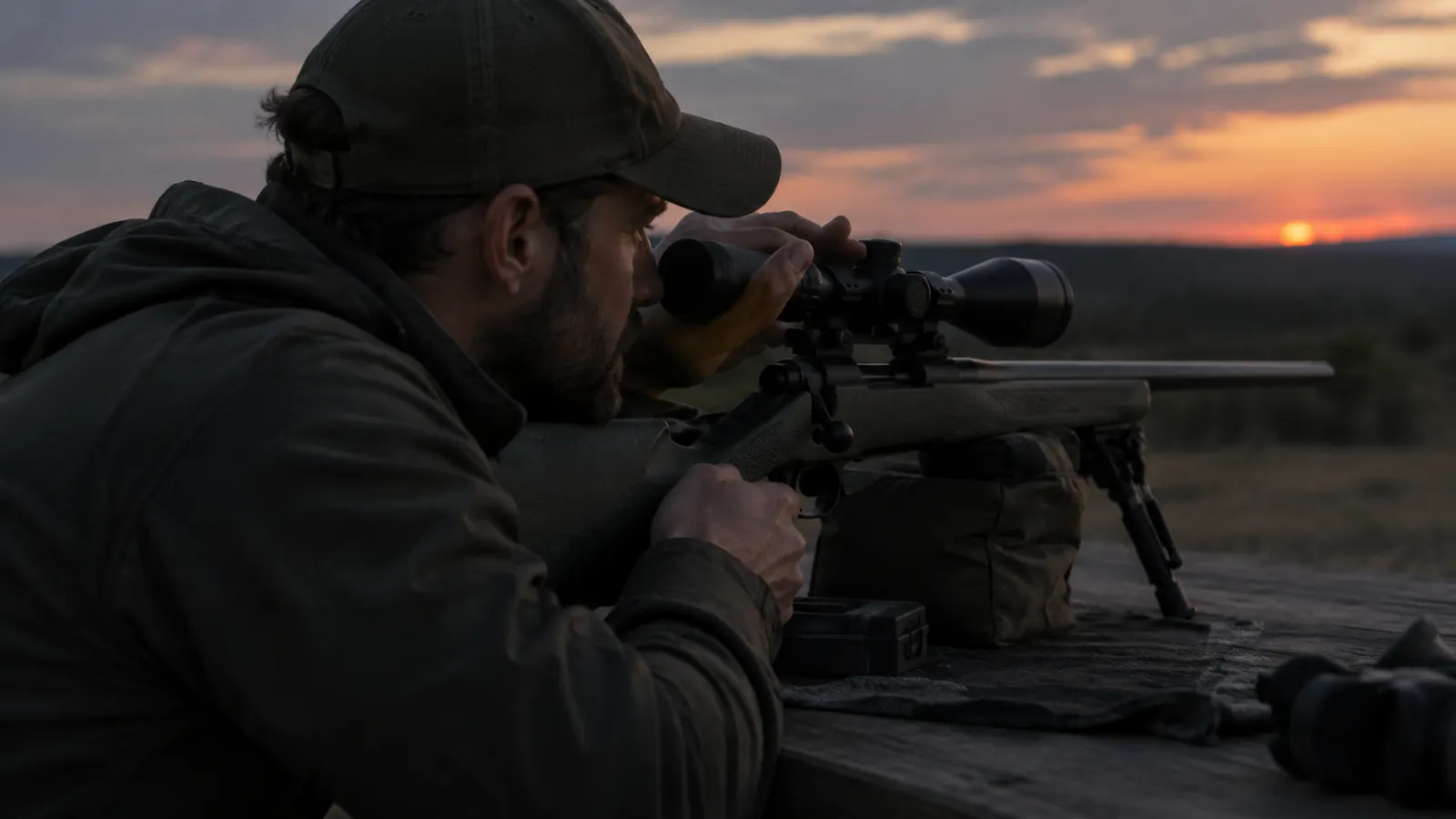
Low light is where the Crossfire II shows its price. The 44mm objective lets in a decent amount of light, and the fully multi-coated lenses help. At legal shooting light, I can see well enough to make an ethical shot. But it is not a twilight scope. In the last 15 minutes of legal light, a premium scope will show you detail the Crossfire II will not. The honest way to put it: on a clear evening I can still see antlers at legal light, but on an overcast one I am done ten minutes earlier than I was twenty years ago, and this scope does not buy that time back. I know my limits, and I have passed on shots in low light that a more expensive scope might have let me take. That is the honest tradeoff, and it is the same tradeoff you make with any scope in this price range.
Rain is a different story. The lenses shed water well, and the caps keep the glass dry when the scope is not in use. I have hunted all day in steady rain and never had water inside the tube. The one thing I will say: the lens caps are stiff when they are new. They loosen up after a season, but plan on fumbling with them the first few hunts. It is a small thing, but it is the kind of small thing that matters at dawn when a buck is 80 yards away.
Who This Is For
The Vortex Crossfire II 4-12x44 is for the hunter who needs dependable glass and has a family budget. It is for the guy who sights in at a gravel pit, hunts public land on weekends, and wants a scope that will hold zero in cold rain without a second mortgage. It is for the first-time scope buyer who is upgrading from a cheap starter scope and wants to know the next step up will actually last. It is for the middle-aged hunter whose eyes are not what they were at dawn and dusk, because the 12x magnification and the 44mm objective give you a real advantage over a 3-9x40 in the timber and on the cuts.
It is also for the hunter who values the warranty as much as the glass. Vortex has a lifetime warranty that follows the scope, not the original owner. I have never had to use it, but I have heard enough stories from other hunters to know it is real. You drop the scope off a cliff, and Vortex fixes it or replaces it. That is a level of security you do not get from most budget brands, and it is a big part of why I chose this one.
Who Should Skip It
Skip the Crossfire II if you are a long-range shooter who dials turrets on every shot. The mushy clicks will drive you crazy, and you will be better served by a scope with exposed, repeatable turrets. Skip it if you need a twilight scope for the last 15 minutes of legal light, because that is where this scope gives up ground to the expensive glass. And skip it if you want a lightweight setup, because the 44mm objective and the 1-inch tube add up to a scope that is not heavy, but is not featherweight either. On a light mountain rifle, you will feel it.
I would also tell a hunter who only shoots at 100 yards to consider the 3-9x40 version instead. The extra magnification is nice, but it costs you a little low-light performance and a little weight, and if you never shoot past 150 yards, you are paying for something you will not use. The 4-12x44 earns its keep on logging cuts and open country. In thick timber, the 3-9x40 is the better tool. That is not a criticism of this scope. It is just an honest answer to the question of which one to buy.
Still deciding? The Crossfire II is the safe bet for a working hunter
Two seasons in, I would buy it again. If you want the same peace of mind, check today's price on Amazon and see why this is one of the most-reviewed budget scopes on the market.
Amazon Check Today's Price on Amazon →