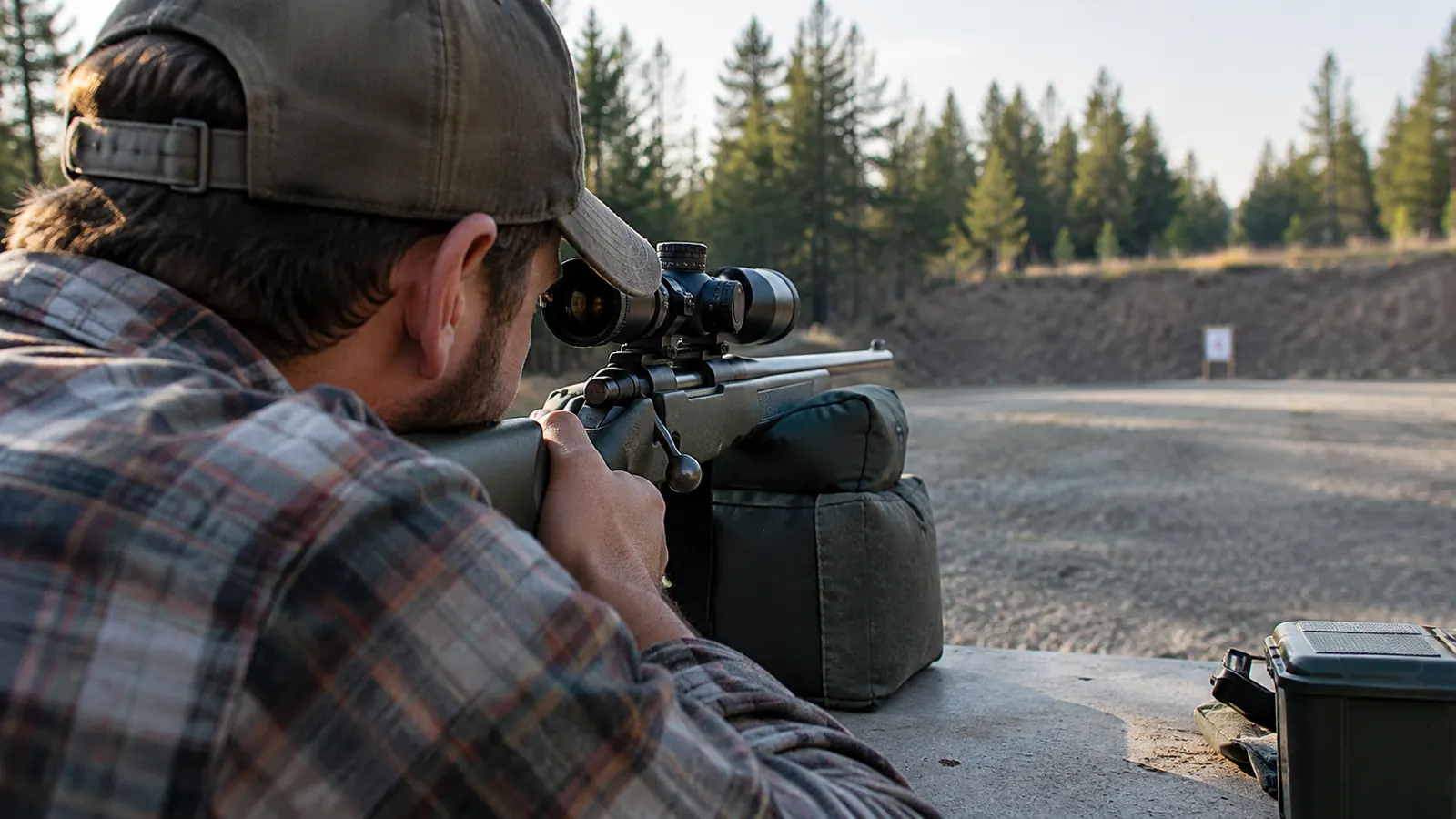
If you are trying to decide between the Vortex Crossfire II 4-12x44 and the 3-9x40, you are probably standing in the same spot I was a few years ago: a gravel pit range outside Sandpoint, a .308 on the bench, and a nagging feeling that the scope you grew up on is not quite doing what your eyes need anymore. I have carried both of these Vortex scopes on public land in the Idaho panhandle and western Montana for the better part of a decade, and I have a clear picture of where each one earns its keep. The short answer is that the 4-12x44 is the better buy for most working hunters, but not for the reason the spec sheet suggests. The extra magnification matters less than the bigger objective lens and the way it behaves at dawn and dusk, which is exactly when the shot you have been waiting for finally shows up.
Here is a concrete example before we get into the details. Two Novembers ago I was set up on a logging cut outside Bonners Ferry, about a mile in from the road, on a morning so cold the bolt handle on my .308 felt like it had been left in the freezer. Legal shooting light was maybe ten minutes old when a small buck came out of the alders at 140 yards. With the 3-9x40 that had been on that rifle for years, I could see him well enough to know he was a buck, but the reticle was hard to pick up against the dark timber behind him, and I let him walk. On the drive home I ordered the 4-12x44. Three seasons later I can tell you it was the cheapest upgrade I have made to that rifle, and it is the one I would buy again tomorrow.
The 4-12x44 is the one I would buy again
After a season of carrying both, the bigger objective lens won. Check today's price on the Vortex Crossfire II 4-12x44 before you order the 3-9x40 out of habit.
Amazon Check Today's Price on Amazon →| Vortex Crossfire II 4-12x44 | Vortex Crossfire II 3-9x40 | |
|---|---|---|
| Magnification | 4-12x, with a useful 6x to 10x sweet spot | 3-9x, with a useful 4x to 7x sweet spot |
| Objective lens | 44mm, noticeably brighter at last light | 40mm, fine in full sun, dimmer in timber |
| Weight | About 20.6 ounces, noticeable but manageable | About 15 ounces, easier to carry all day |
| Eye relief | About 3.9 inches, forgiving on a .308 | About 3.9 inches, same forgiving feel |
| Parallax | Adjustable side focus, dials out parallax at longer range | Fixed at 100 yards, fine for most hunting shots |
| Low-light performance | Brighter image at dawn and dusk | Good, but the smaller lens gives up ground |
| Best for | Hunters whose eyes are not what they were at 40 | Hunters who want the lightest, simplest setup |
Where the 4-12x44 Wins
The first thing you notice is the low light. I have a spot in western Montana, a ridge above a beaver pond, where the deer come out of the timber about twenty minutes before shooting light ends. I have hunted that same ridge for six seasons, and it has become my unofficial test range for optics because the light is so consistent there. On the evening of November 9 last year I had the 4-12x44 on the .308, dialed down to 7x, and I could pick out the points on a buck standing in the shadow line at 190 yards. Two weeks earlier, with the 3-9x40 on the same rifle at the same spot, a very similar situation had ended with me lowering the gun because the image had that washed-out, gray look that makes you second-guess every part of the shot. The 44mm objective gathers more light than the 40mm, and for a 54-year-old eye that is not a small difference. It is the difference between taking the shot and letting the deer walk because you cannot see the crosshairs clearly. I have done both, and I can tell you which one stays with you.
The extra magnification also earns its keep at the gravel pit. I sight in at a pit range outside town with a 100-yard and a 200-yard berm, and I keep a notebook in the truck with the zero for every rifle I own. At 200 yards, the 3-9x40 on 9x shows a target that is workable but small, roughly the size of a coffee can lid in the glass. The 4-12x44 on 10x or 12x makes the same target look like it is sitting at 100. That does not mean you should start taking 400-yard shots you have no business taking. It means you can see your impact point, spot your own misses, and actually learn something from a box of ammunition instead of walking back and forth to the berm. Last spring I burned through a box of 165-grain loads on a windy afternoon, and the 12x setting let me watch my groups open up and then tighten back down as the gusts died, without ever leaving the bench. For a guy who wants to know where his rifle is hitting, that is worth the extra ounces by itself. And there is one more thing the 4-12x44 has that the 3-9x40 does not: an adjustable side focus for parallax. At 100 yards it does not matter much, but the first time I shot at a steel plate at 280 yards, being able to dial out the parallax made a visible difference in how steady the reticle sat on the plate.
One more thing I will mention, because it is the reason I trust this scope on a rifle I carry in bad weather. I have had the 4-12x44 on my .308 for three seasons now, through rain, snow, and a November cold snap that hit 4 below zero, and the zero has not moved. The turrets click solid and they track true when I dial up for a longer shot and come back down. I tested that one windy afternoon at the gravel pit: dialed up 12 clicks, shot a group, dialed back, shot another group, and the second group landed in the same ragged hole as the first. I did the same test with the 3-9x40 before I moved it to the spare rifle, and it tracked true too. Vortex builds both of these scopes to a standard that did not exist at this price point when I started hunting, and the warranty is the same on both. But the 4-12x44 is the one I trust on the rifle I carry when the weather is going to be ugly.
Where the 3-9x40 Wins
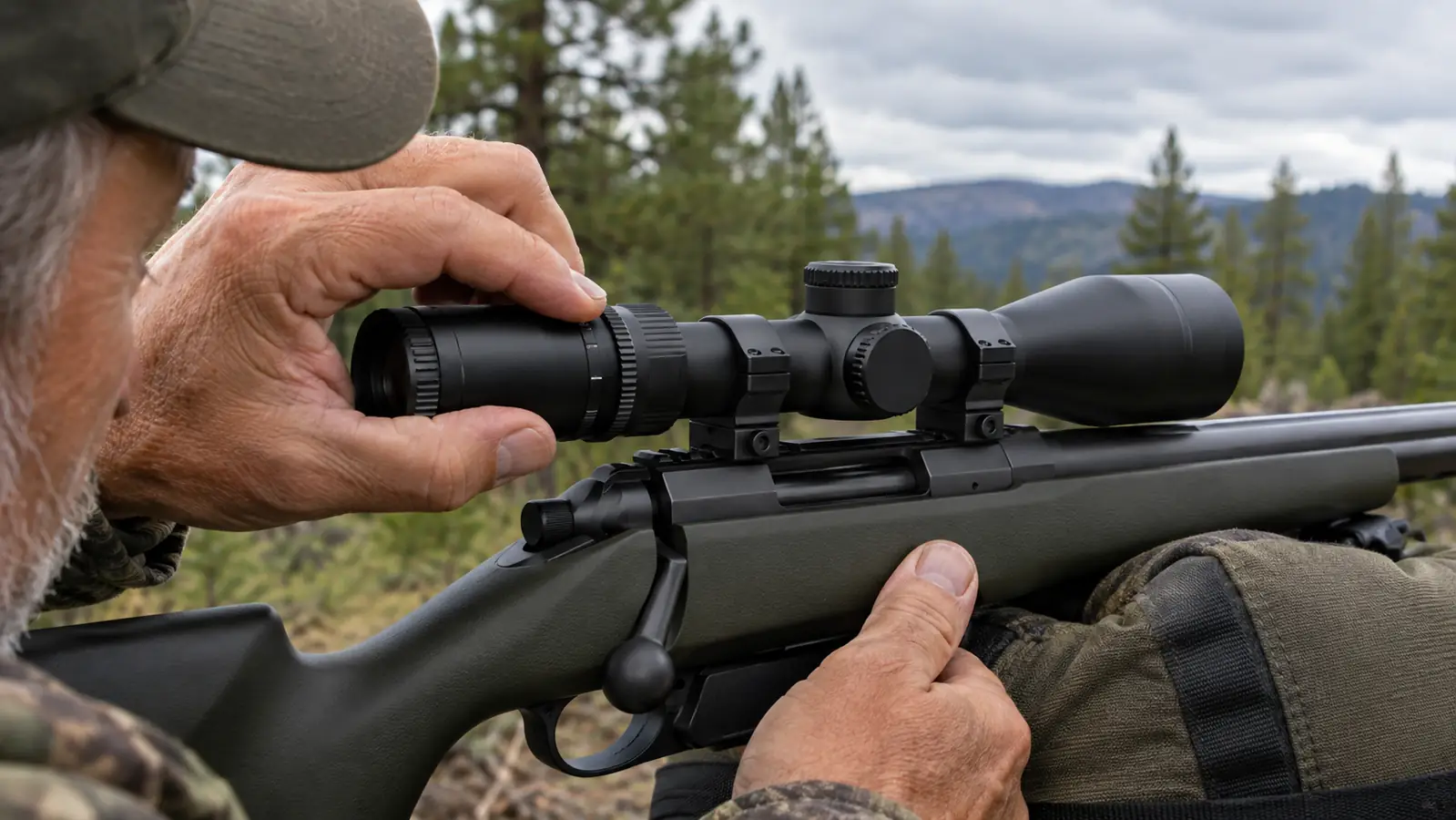
I will not pretend the 3-9x40 does not have a place, because I carried one for years and I still own one on a spare rifle. It is about five ounces lighter, and after a ten-mile day in the Selkirk Mountains, five ounces on the end of a rifle barrel feels like five pounds. I remember one particular November morning, hiking into a drainage above Priest Lake with the 4-12x44 on the rifle, and by the time I got to the top I would have traded the extra magnification for a lighter gun without a second thought. The 3-9x40 is also simpler. There is less magnification to fiddle with, less to think about when a buck is standing at 80 yards in a cut and you have about four seconds to decide. On 3x, the field of view is wide enough that you can find a moving animal in the glass without panning around like a man looking for his keys. For a hunter who mostly works close timber and wants the lightest, most foolproof setup, the 3-9x40 is a legitimate choice, and I would not argue with a man who picks it for that reason. The eye box is also forgiving, which matters more than the spec sheets admit when you are shooting from an awkward position in a ground blind.
The 3-9x40 also wins on price, and I am not going to pretend that does not matter. The difference is not huge, but for a first-time scope buyer it can be the difference between a Vortex and a no-name brand that will not hold zero. I have recommended the 3-9x40 to more than one friend who needed a scope this season and could not stretch to the 4-12x44. There is also something to be said for the lower profile of the 40mm objective. It sits closer to the barrel, which means it clears low scope rings more easily, and on a rifle you carry through alder thickets, a smaller bell is one less thing to snag on a branch. The 3-9x40 is also a little more forgiving if you are mounting it yourself, because there is less of it to fight with. The honest answer is that both are good scopes. The 4-12x44 is better where it counts for me, but the 3-9x40 is the one I would hand to a young hunter on a budget, and I have done exactly that with more than one young hunter's first deer rifle.
For the right buyer, the 3-9x40 is not a compromise, it is the right tool. My wife Deb has one on her .243, the rifle she uses for whitetail from a ground blind on the edge of a hay meadow. She has never once wished for more magnification, because her longest shot in five seasons was 110 yards. For that kind of hunting, the 3-9x40 on 4x or 5x gives a field of view that lets her pick up a deer walking the treeline without hunting around in the glass. And because the scope is lighter, the .243 balances better in her hands when she is carrying it the half mile to the blind. I set it up for her four years ago and I have not touched the zero since. If your hunting looks like hers, close to home, close cover, short shots, the 3-9x40 is not the budget pick. It is the right pick.
The bigger lens is the difference
If you hunt dawn and dusk like I do, the 44mm objective is worth it. See today's price on the Vortex Crossfire II 4-12x44 and decide for yourself.
Amazon Check Today's Price on Amazon →
Who Should Buy Which
Buy the 4-12x44 if you are over 40, if you hunt timber where the light gets thin, if you want to see your impacts at 200 yards, or if you are the kind of hunter who would rather buy one scope and keep it for ten years. That last one matters more than most guys admit. The difference in price between these two is a one-time cost, but you will carry the scope you buy on every hunt for the next decade. Stretch once, and you stop thinking about it. Buy the 3-9x40 if you are on a tight budget, if you mostly hunt close cover, if you are a younger hunter whose eyes still do what they are told, or if every ounce on the rifle matters to you. There is no wrong answer between these two. There is only the wrong answer for your specific hunting, and the wrong answer is usually the one that leaves you squinting at dusk. I have watched friends buy a no-name scope to save money and replace it within two seasons. Either of these Vortex scopes will likely be the last scope you put on that rifle.
I will tell you what I tell every guy who asks me at the gravel pit: if you can afford the 4-12x44, buy it. If you cannot, buy the 3-9x40 and do not look back. Both will hold zero in cold rain, both have the Vortex warranty behind them, and both will outshoot the cheap scope you are replacing. The 4-12x44 just does it a little better at the two times of day when it actually matters. I have carried both for the better part of a decade, on whitetail hunts in the panhandle and elk hunts in western Montana, in rain, snow, and cold so dry the bolt grease froze. The 3-9x40 never let me down. The 4-12x44 has never let me down either, and it shows me more when the light is going. On my .308, with 165-grain loads, the 4-12x44 has helped me put three-shot groups inside two inches at 200 yards on a calm day. That is more accuracy than I need for the shots I take, but it is nice to know the scope is not the weak link. If that sounds like the trade you want to make, you already know which one to order.
The 4-12x44 is the one I would buy again
After a season of carrying both, the bigger objective lens won. Check today's price on the Vortex Crossfire II 4-12x44 before you order the 3-9x40 out of habit.
Amazon Check Today's Price on Amazon →