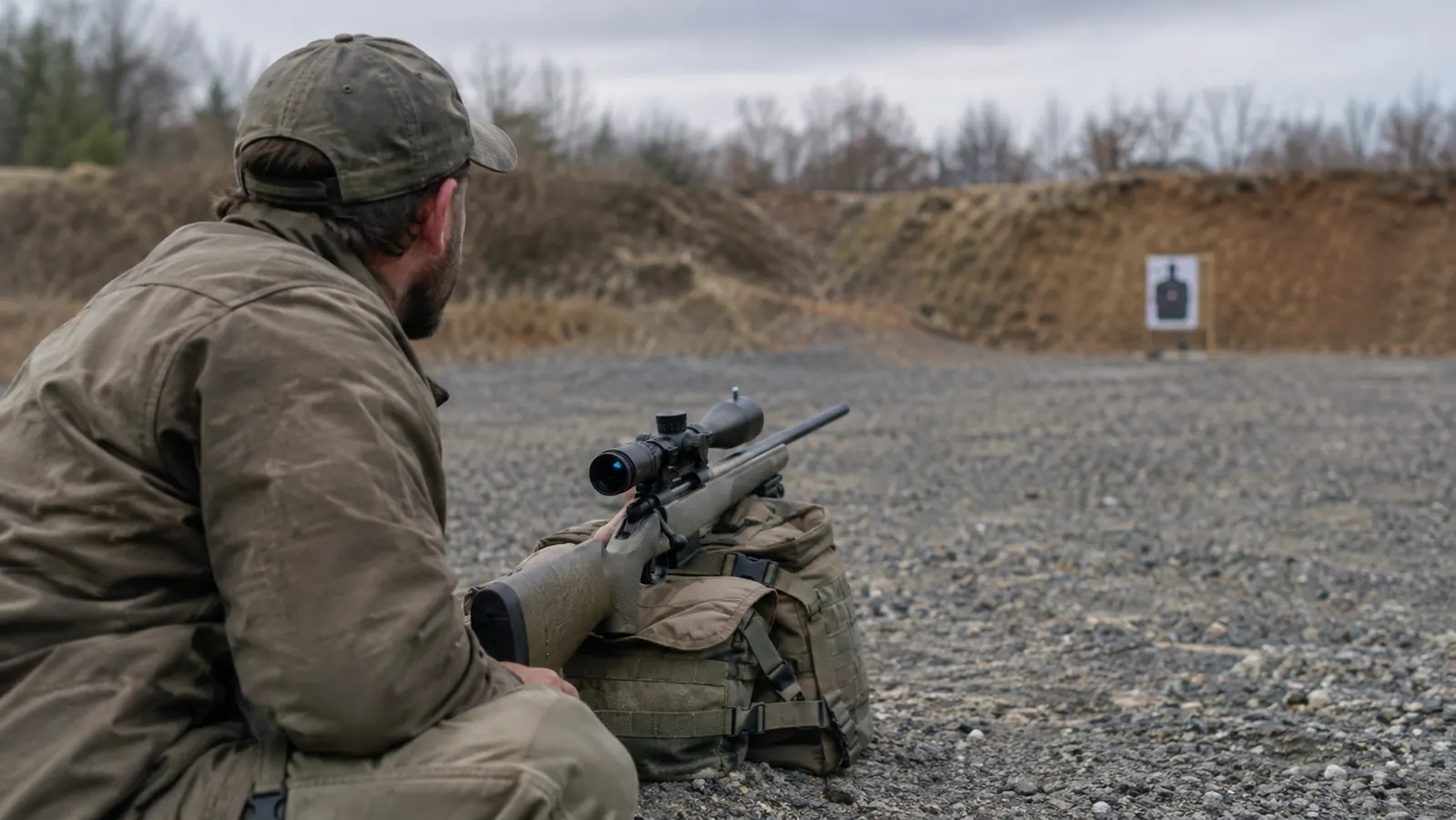
If you hunt the same country I do, most of your shots are inside 200 yards. But every season there is that one buck or bull that stands at the far edge of a logging cut, and you have to decide whether you can honestly make that shot. A 4-12x44 scope is the answer a lot of working hunters land on, and the Vortex Crossfire II in that configuration has been on my .308 for years. Here are ten plain reasons why that magnification range earns its place on a rifle meant for shots out to 300 yards.
The 4-12x44 That Sits on My .308
I have carried the Vortex Crossfire II 4-12x44 through cold Idaho rain, gravel pit sight-ins, and more logging road miles than I can count. It holds zero, tracks true, and the Dead-Hold BDC reticle takes the guesswork out of a 300-yard poke.
Amazon Check Today's Price on Amazon →4x on the Bottom End Still Works in Timber
The low end of this scope is 4x, which is plenty for a buck slipping through alders at 40 yards. Two seasons ago I had a whitetail step out of a thicket not thirty yards from my stand, and I never touched the magnification ring. At 4x the field of view is wide enough that I could see the whole deer and the lane it was walking, and I made the shot without ever feeling like the scope was in the way. You are not stuck at high magnification when the action is close, and you are not stuck at low magnification when it is far. That range is the whole point of a 4-12x44.
12x Turns a 300-Yard Buck Into a 100-Yard Buck
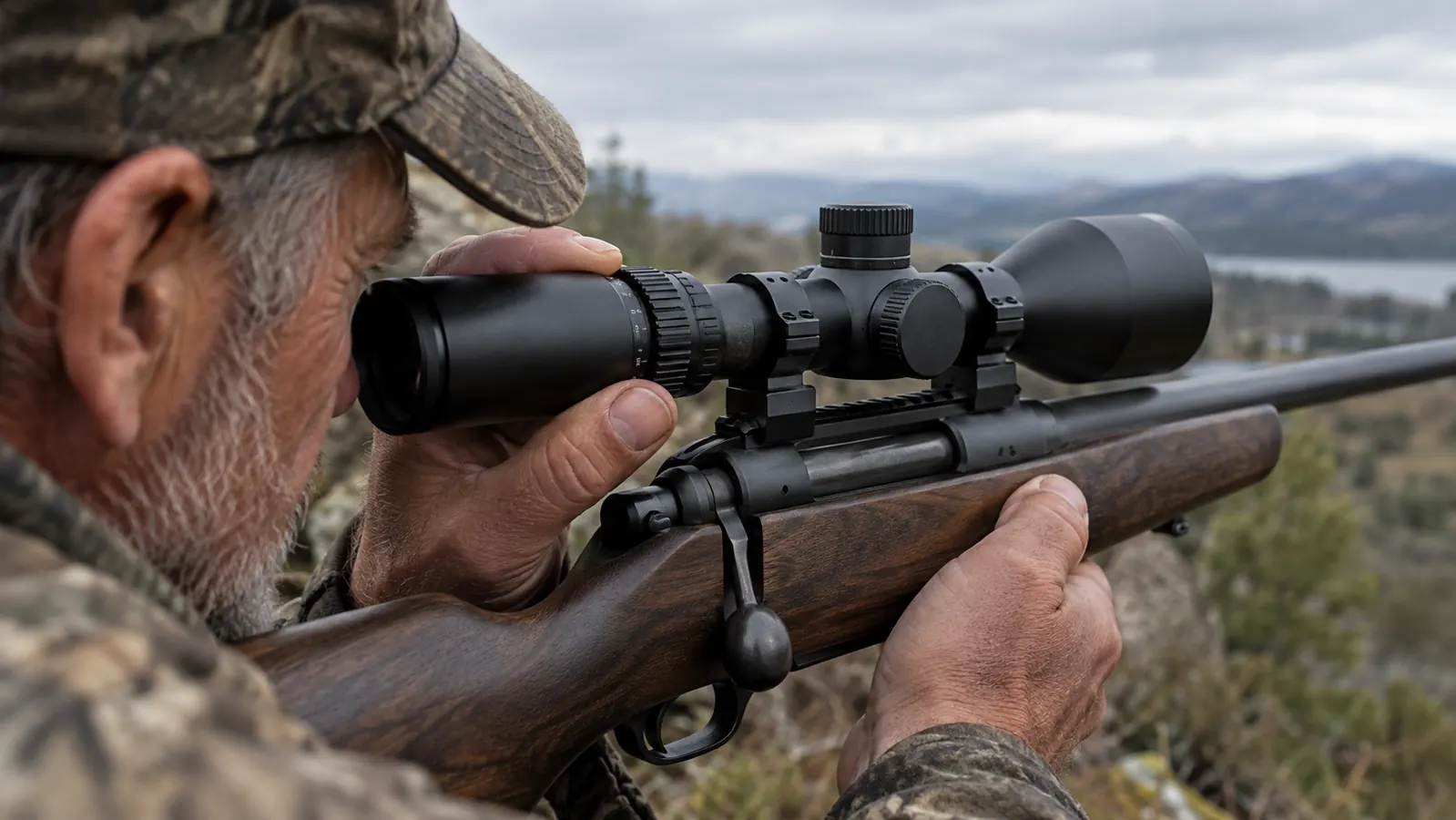
At 12 power, a deer at 300 yards fills the field of view like it does at 100 yards on 4x. You can read the angle of the near leg, see the hair on the shoulder, and pick a precise spot instead of aiming at a general shape. Last October I had a mule deer at the far edge of a clear-cut, and at 12x I could see the exact crease behind its shoulder. That is what ethical shot placement looks like through the glass, and it is the difference between a clean kill and a long tracking job.
The 44mm Objective Pulls in Dawn and Dusk Light
The 44mm objective lets more light through than a 40mm tube at the same magnification, and that matters in the last ten minutes of shooting light. I have passed on shots I could not see well enough to take, and I have taken shots I could see clearly because the bigger objective gathered enough light. One evening in November I stayed on a ridge until the light was almost gone, and the 44mm objective let me see a buck's outline against the timber long after my buddy's 40mm had gone dark. That extra margin is worth a lot when the season comes down to one opportunity.
The Dead-Hold BDC Reticle Removes Guesswork
The Dead-Hold BDC reticle gives you holdover marks below the crosshair, so a 300-yard shot does not require dialing or guessing. Once you learn where your load lands on those marks, you can put the right dot on the right hair and squeeze. I spent an afternoon at the gravel pit with a box of my hunting loads, shooting at the 200-yard berm and then the 300-yard target, and I wrote the numbers on a piece of tape stuck to the stock. Now when a buck stands at the far end of a cut, I know exactly which mark to use. It is a simple system that works in the field.
Capped Turrets Stay Put in a Scabbard or a Truck Rack
The turrets are capped and low profile, which means they do not snag on a scabbard, a pack, or the gun rack in my truck. I have bumped this scope against more things than I can count, and the zero has not moved. Last season I drove forty miles of washboard Forest Service roads with the rifle in the rack, then pulled it out and put the first shot inside a three-inch circle at 100 yards. That is the kind of dependability a working hunter actually needs, and it is why I do not think twice about how the rifle gets handled between home and the mountain.

The Fast-Focus Eyepiece Helps Middle-Aged Eyes
At 54, my eyes are not what they were at 25. The fast-focus eyepiece lets me get the reticle sharp in seconds, and the generous eye relief keeps me from getting clipped by the scope when I am shooting from an awkward kneeling position. I set the focus one morning at the gravel pit, and I have not had to touch it since. That matters more every year, especially at dawn when the light is flat and my eyes are still adjusting. A scope that fights you on focus is a scope you will not shoot well, and this one does not fight.
It Holds Zero Through Rain, Cold, and Gravel Pit Abuse
I sight in at a gravel pit outside town, and I hunt in weather that would make a fair-weather shooter stay home. This Vortex has been rained on, frozen, and bounced down logging roads, and it still puts the first shot of the season where I put it in October. One year I left it on the rifle all through a week of rain and sleet, and when the sun finally came out the zero had not moved a quarter inch at 100 yards. That is the test that matters, and it is the reason I trust this scope on a hunt where I only get one good chance.
The Magnification Ring Turns Smoothly in Cold Weather
Some scopes get stiff when the temperature drops, and you end up fighting the ring instead of the shot. The magnification ring on this one turns smoothly even when my fingers are cold and gloved. I have had it out in single-digit weather, and the ring still moves with one hand. When a buck steps out at 250 yards, I can get to 10x or 12x without fumbling, and that speed matters when the deer is already moving. A stiff ring has cost me more than one opportunity on other scopes, and this one has never done that to me.
It Is a Real Upgrade From a 3-9x40 Without Breaking the Budget
If you are coming off a 3-9x40, the jump to 12x and a 44mm objective is noticeable, and the price stays within reach for a working guy. You get more reach and more light without spending a paycheck. I made that exact switch myself, and the first time I looked through it at the 200-yard berm I could see the difference immediately. The target was bigger, the crosshair was crisper, and I did not have to squint to see where the bullet landed. That is the value proposition that matters to most of us.
The Vortex Warranty Means It Is the Last Scope You Buy
Vortex backs the Crossfire II with an unlimited, transferable warranty. If it breaks, they fix or replace it, no receipt questions. I have not needed it, but knowing it is there means I do not treat this scope like a fragile instrument. I treat it like a tool, and it acts like one. For a guy who hunts public land and works his gear hard, that kind of backing is worth as much as the glass itself. It is the reason I would buy another Vortex tomorrow without hesitating.
What I'd Skip
I would skip this scope if you are a dedicated long-range shooter who dials every shot past 400 yards. The 1-inch tube and capped turrets are not built for repeated elevation dialing, and the BDC reticle is calibrated for a specific load, so you will need to verify your own drops. For the working hunter who makes one or two deliberate shots a season out to 300 yards, it is hard to beat. For a benchrest competitor, it is the wrong tool.
I have bumped this scope against more things than I can count, and the zero has not moved. That is the test that matters.
Put the Same Glass on Your Rifle
The Vortex Crossfire II 4-12x44 has been on my .308 for years, and it has never let me down. If you want more reach and more light without spending a paycheck, this is the scope to start with.
Amazon Check Today's Price on Amazon →