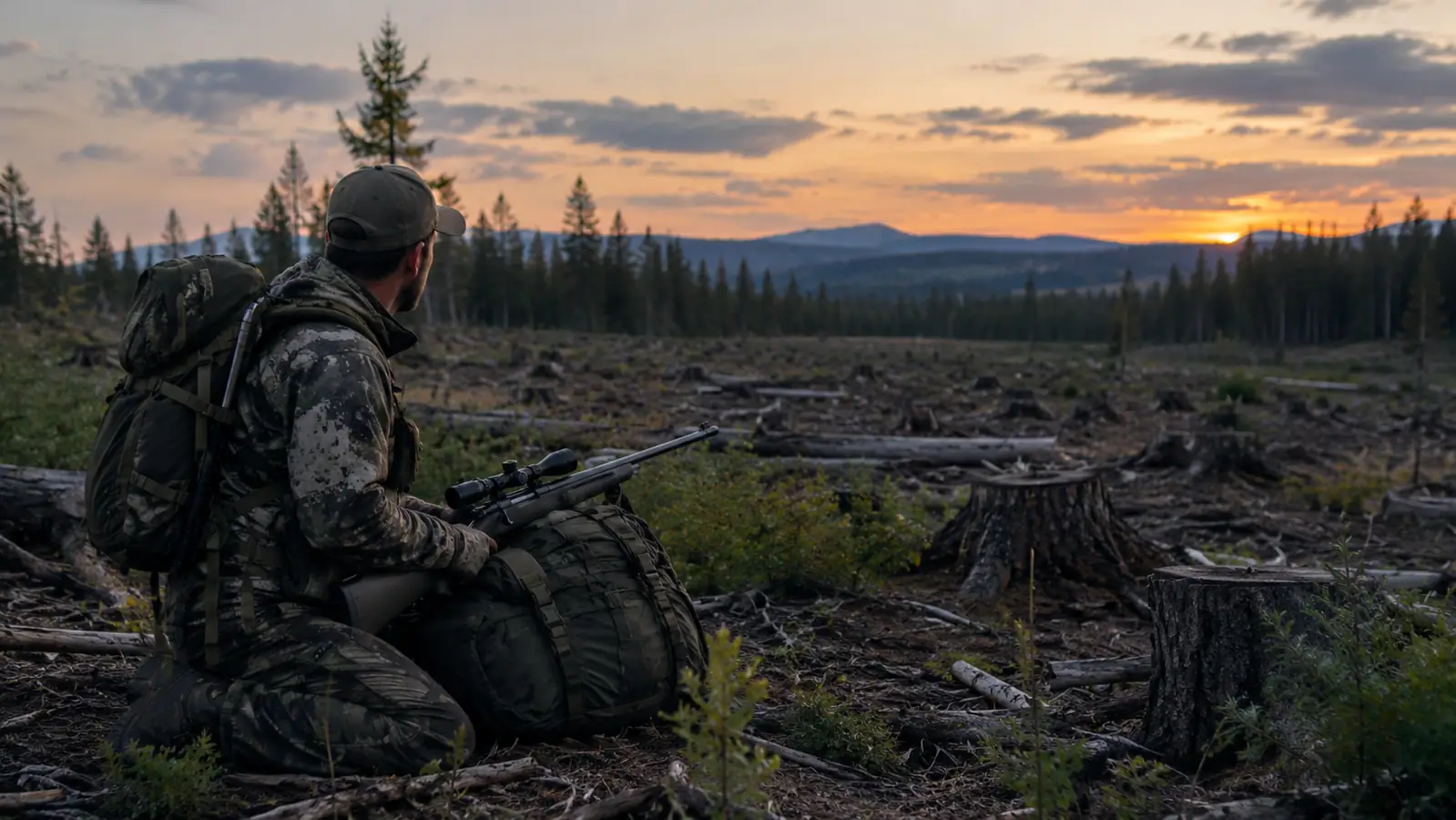
The first time I ranged that buck, he was standing at the far edge of the logging cut, 312 yards across, and the light was going fast. My old scope had been fine at 100 yards on the gravel pit berm, but at dusk, across a cut full of stumps and brush, it just ran out of answers. That is why I finally put a Vortex Crossfire II 4-12x44 on my .308, and why I have kept it there for two full seasons of Idaho deer and elk hunting.
I am Clay Brennan, a county road maintenance foreman outside Sandpoint, Idaho, and I have hunted whitetail, mule deer and elk for about 35 years. I am not a gear reviewer. I am the guy who sights in at a gravel pit, hunts public land on weekends, and wants a scope that holds zero in cold rain without spending a paycheck. This is what the Vortex Crossfire II 4-12x44 has been like to actually live with.
The Quick Verdict
The Vortex Crossfire II 4-12x44 is the best budget scope I have used for timber and cut hunting from 50 to 300 yards. The glass is clear enough at dawn and dusk, the Dead-Hold BDC reticle is genuinely useful once you learn it, and the warranty means you stop worrying about the scope and start worrying about the shot.
Amazon Check Today's Price →Reach across the cut without reaching deep into your wallet
The Vortex Crossfire II 4-12x44 has been my go-to for two seasons of public-land hunting. Check today's price on Amazon and see why it keeps showing up on working rifles.
Amazon Check Today's Price on Amazon →How I've Used It
My setup is simple: a .308 bolt-action I have carried for years, topped with the Vortex Crossfire II 4-12x44 in a one-inch tube. My wife Deb runs a .243 for whitetail, and I have helped her sight in more than a few scopes, so I have a decent feel for what a scope does and does not do well. This one has been on my rifle for two hunting seasons, plus a lot of range time at the gravel pit outside town.
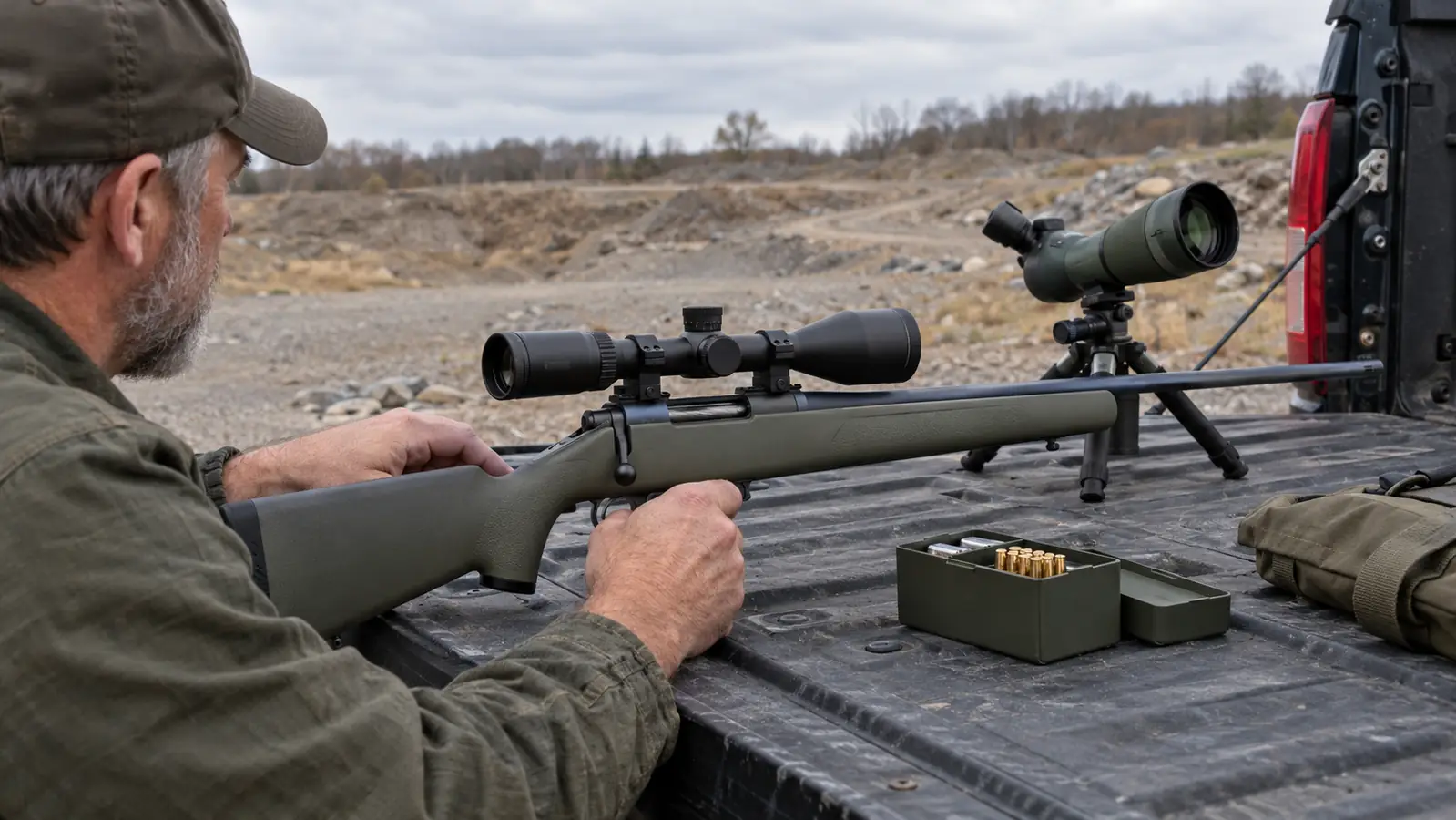
I mounted it myself on a cold Saturday in early September, two seasons back, using a set of rings I already had in the drawer. I torqued the bases to spec, leveled the reticle against a plumb line I hung from the shop rafters, and bore-sighted it down the hallway before I ever got to the gravel pit. The first three shots at 100 yards landed in a group I could cover with a quarter, and I have not touched the turrets since except to confirm zero.
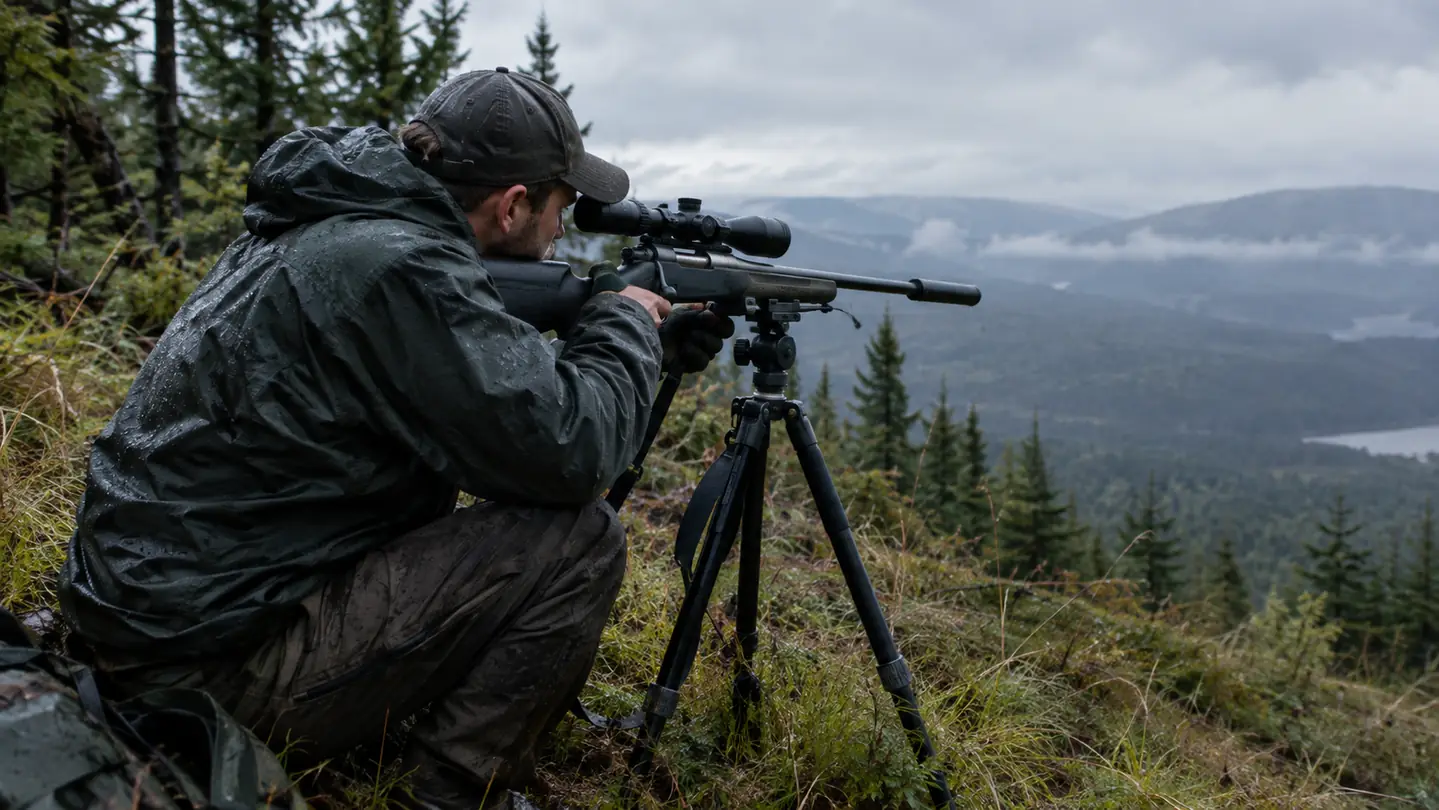
I have used it in the rain, in the snow, in the kind of cold that makes your fingers stiff, and in the last ten minutes of legal light when the deer are moving. I have carried it on a sling for miles of timber, bounced it in the truck on logging roads, and knocked it against more tree trunks than I care to admit. I have also spent a lot of hours at the 100-yard and 200-yard berms, working up loads and checking zero.
The short version: it has never lost zero on me. Not once. That is the whole job, and the Vortex Crossfire II 4-12x44 does it.
What the 4-12x44 Magnification Range Actually Gets You
A lot of first-time scope buyers get talked into more magnification than they need. I have watched it happen. They buy a 6-24x or a 4-16x and then spend the whole season at 6 power because everything above that is too much for the shots they actually take. The 4-12x range on this Vortex is, for my kind of hunting, just about perfect.
At 4 power, you can pick up a buck moving through timber fast, and you can shoot with both eyes open if you practice it. At 12 power, you can see the far edge of a 300-yard logging cut well enough to place a shot on a deer's shoulder. The 44mm objective lets in enough light that the scope is still usable at dawn and dusk, which is when the deer actually move. It is not a high-end European scope, and I am not going to pretend it is. But it is a long way from the cheap starter scope I used to hunt with.
The magnification ring is stiff when it is new. That loosens up with use, and I actually like a ring that takes a little effort, because it does not get knocked off your setting when you are pushing through brush. The power adjustment is on the left side of the turret, which took me a couple of trips to get used to, but now it is automatic.
One morning last October I watched a spike buck cross the cut at a fast walk, and I never had to take my eye off him to change power. I reached up, rolled the ring from 6 down to 4 as he closed from 180 yards to about 70, and the shot presented itself clean. That is what a sensible magnification range buys you: one less thing to think about when the moment is short.
The Dead-Hold BDC Reticle, Learned the Hard Way
The Dead-Hold BDC reticle is the feature that scares off a lot of buyers, because it looks busy. I am going to tell you the truth: it took me a range session to understand it, and then it became the reason I would not switch back to a plain duplex.
The reticle has a main crosshair with a series of holdover dots below it. Each dot corresponds to a distance, but the exact distance depends on your cartridge and your zero. For my .308 with a 100-yard zero, the first dot is close to 200 yards, the second is close to 300, and the third is past where I have any business shooting at a deer. I wrote those numbers on a piece of masking tape and stuck it to the inside of my scope cap. That tape is still there.
The important thing is that you have to verify the dots at the range. Do not trust the box. I have seen shooters miss a buck because they assumed the second dot was exactly 300 yards with their load, and it was not. Spend an afternoon at the gravel pit, shoot at 200 and 300, and write down what your rifle actually does. Once you do that, the reticle is a fast, practical tool for a shot that develops in a hurry.
Here is what that verification looked like for me. I set a target at the 200-yard berm, held the first dot on the center, and put three rounds into a group just over two inches. Then I moved to the 300-yard berm, held the second dot, and my first shot landed three inches low and two left. I clicked the windage a touch, held the same dot, and the next two were inside a fist-sized group. That afternoon told me more about the reticle than any manual could, and it is the afternoon I tell every friend to copy before they hunt with a BDC.
I have used it in the rain, in the snow, and in the last ten minutes of legal light. It has never lost zero on me. Not once.
How the Glass Holds Up at Dawn and Dusk
This is the part where budget scopes usually fall apart, and where the Vortex Crossfire II 4-12x44 earns its keep. The glass is not top-tier, but it is remarkably good for the price. At the edges of legal light, I can still make out a deer's outline against the treeline, and I can see enough of the shoulder to make an ethical shot. That is the whole test, as far as I am concerned.
The eye relief is forgiving, which matters more as I get older and my shooting position gets less flexible. I have caught myself with my eye a little out of position on a hurried shot, and the sight picture has still been there. The eyebox is not as generous as a high-end scope, but it is better than anything else I have tried in this price range.
One honest complaint: in heavy rain, the lens coating will smear if you are careless. I keep a lens cloth in my chest pocket and I wipe the objective before a shot if it has been raining hard. That is normal maintenance for a scope at this price, and it is not a reason to avoid the Vortex Crossfire II 4-12x44. It is just a thing you should know.
The clearest test came on an evening in late November when the temperature dropped to 18 degrees and a wet snow started falling about twenty minutes before dark. I was set up on the edge of a cut, and a mule deer doe stepped out at 240 yards. I could see her shoulder, the line of her back, and the base of her neck well enough to know exactly where I would have put a shot. I did not take it, because I was not hunting does that day, but I sat there afterward and thought: this is why the 44mm objective matters. On a scope with a smaller objective, that doe would have been a gray blur.
Turret Feel, Zero Retention, and the Warranty That Backs It
The turrets on the Crossfire II are capped, which I prefer on a hunting rifle. You set your zero, put the caps back on, and you do not have to worry about the dials getting bumped in the truck or in the brush. The clicks are positive and easy to feel, even with gloves on, which is more than I can say for some scopes I have used.
Zero retention is the thing I care about most, and this scope has been rock solid. I have knocked it, dropped the rifle, carried it in a scabbard on an ATV, and left it in a cold truck overnight. Every time I get to the gravel pit, the first shot is where it should be. That consistency is worth more than any feature list.
I can give you a specific example. Last spring I was clearing a blowdown off a Forest Service road and had the rifle leaning against the tailgate. The tailgate latch let go, the rifle hit the gravel hard, and the scope took the impact right on the objective bell. I finished the job, drove home, and the next morning at the gravel pit the first shot at 100 yards was exactly where it had been the week before. I did not even have to touch the turrets.
And then there is the Vortex warranty. It is a lifetime, transferable, no-questions-asked warranty, and I have seen it honored for other hunters. I have not needed to use it, which is the best thing I can say about it. But knowing it is there changes how you treat the scope. You stop babying it and start hunting with it.
What I Liked
- Holds zero through rain, cold, and hard knocks
- Dead-Hold BDC reticle is fast and practical once you verify it at the range
- 4-12x range covers timber and logging cuts from 50 to 300 yards
- Forgiving eye relief and a usable sight picture at dawn and dusk
- Lifetime, transferable, no-questions-asked warranty from Vortex
Where It Falls Short
- Magnification ring is stiff when new
- Lens coating smears in heavy rain if you do not keep it wiped
- BDC dots must be verified with your own load, not trusted out of the box
- Glass is good for the price, not top-tier
Who This Is For
This scope is for the working hunter who wants one rifle that does everything from a 50-yard timber shot to a 300-yard cut, without spending a paycheck. It is for the first-time scope buyer who is upgrading from a cheap starter scope and wants something that will not embarrass them at the range. It is for the middle-aged hunter whose eyes are not what they were at dawn and dusk, because the 44mm objective and the forgiving eye relief genuinely help.
If you are the kind of hunter who verifies your zero every season, learns your reticle, and takes shots you are confident you can make, the Vortex Crossfire II 4-12x44 is going to serve you well for a long time. It is the scope I recommend to friends who ask, and I have helped two of them mount one on their own rifles. One of those friends, a guy who had hunted with a cheap rimfire scope on his deer rifle for years, called me after his first range session and said he finally understood what he had been missing.
Who Should Skip It
If you are shooting past 400 yards on a regular basis, or if you are trying to shoot tiny groups at 600 yards, this is not the scope for you. The reticle is not a precision target reticle, and the glass will run out of resolution before a high-end scope does. For that job, you want a bigger budget and a different tool.
Also, if you are the kind of shooter who wants to dial elevation for every shot, the capped turrets and the BDC reticle are not built for that. This is a set-and-forget hunting scope, not a competition turret scope. Know which kind of shooter you are before you buy, and you will not be disappointed.
Two seasons in, I would buy it again
The Vortex Crossfire II 4-12x44 has earned its place on my .308. If you are hunting public land on a budget, check today's price on Amazon and see why this scope keeps showing up on working rifles.
Amazon Check Today's Price on Amazon →