I have bought exactly one brand-new riflescope in my life, and it was a Vortex Crossfire II 3-9x40. That is not because I am loyal to the brand. It is because I am a county road foreman who hunts public land on weekends, and my scope budget has always been about the same as my tire budget. I have carried this scope for three seasons now, through Idaho rain, Montana cold, and more logging-road dust than I care to count. Here is what nobody tells you before you buy one.
The short version: the Crossfire II is the right answer for a lot of hunters, and it is also the wrong answer for a few. Most reviews read like the spec sheet grew legs. This one is just field notes from a gravel pit range and a timbered ridge.
The Quick Verdict
A genuinely good budget scope that holds zero, tracks true, and carries a warranty you will probably never need. The glass is honest for the class, the reticle is busy at low power, and the turrets are capped for a reason. Buy it for what it is: a dependable 3-9x40 that lets you spend your money on ammo and gas.
Amazon Check Today's Price →The budget scope I keep recommending to first-time hunters
Three seasons, one .308, and a whole lot of cold rain. The Vortex Crossfire II 3-9x40 is the scope I put on my own rifle when I could not justify anything fancier, and I have not regretted it once.
Amazon Check Today's Price on Amazon →How I've Used It
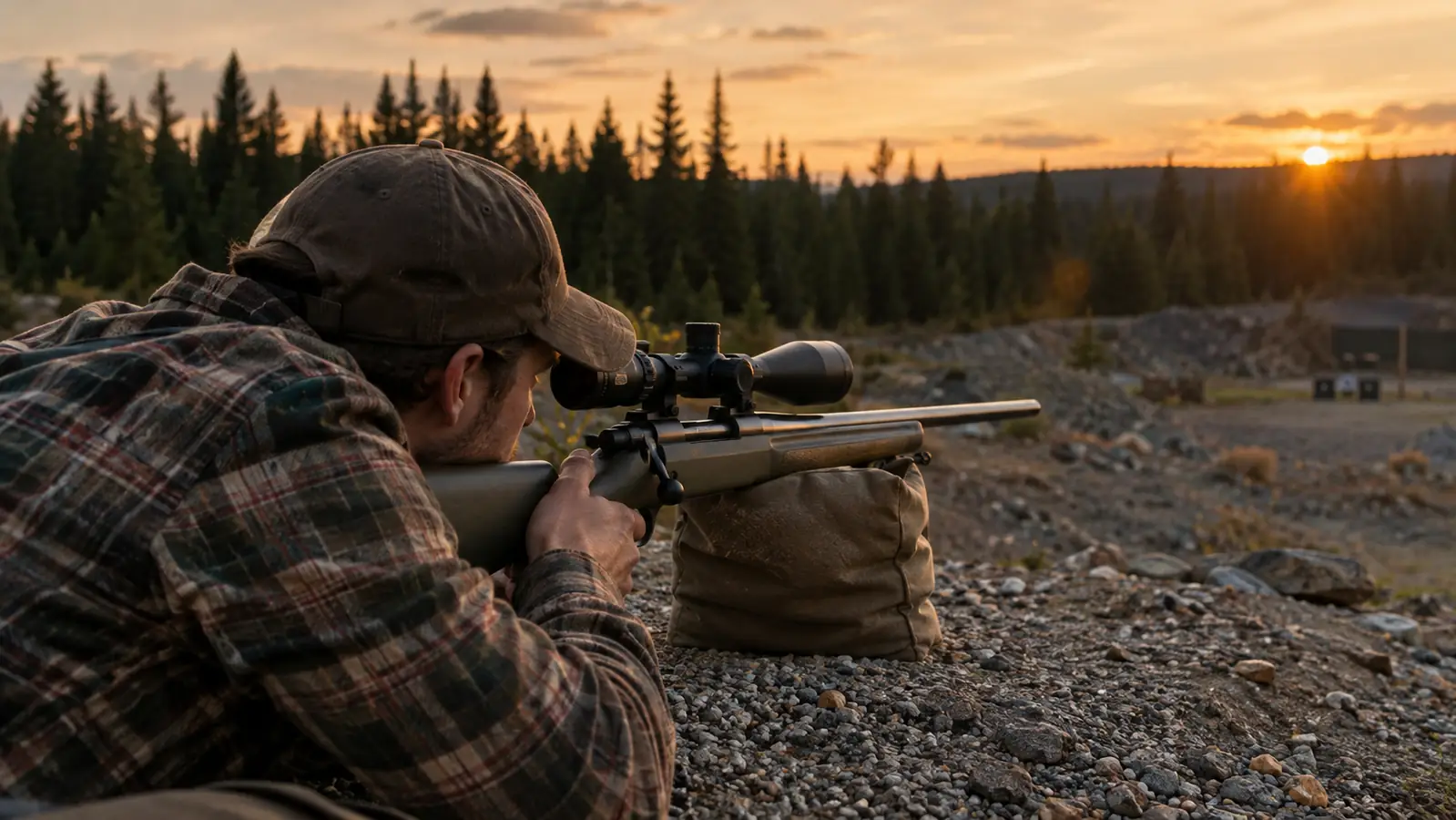
My main rifle is a .308 bolt-action I have carried for years. The Crossfire II has been on it since late August of 2023, which means it has been knocked around in a pickup, soaked in a September downpour, and left in a cold truck overnight more times than I should admit. I sighted it in at the gravel pit range outside town, first at 100 yards and then at 200, and I have checked the zero before every season since. The worst beating it took was opening weekend of elk season in 2023, when a three-point buck crossed a logging road at 80 yards and I had to slide down a wet bank to get a clear shot. The rifle came down hard on a rock, scope first. I finished the hunt, got back to the truck, and the next morning the zero was still dead on.
The mounting was straightforward. The scope comes with a set of rings in the box, which is rare in this class and worth mentioning because it saves a trip to the store. I torqued them to spec, bore-sighted at the kitchen window, and had it on paper within five shots at the gravel pit. That is the experience most people have with this scope, and it is a good one. The one mistake I made was not checking the ring screws after the first fifty rounds. I found the front ring a quarter turn loose at the end of 2023 and spent an afternoon wondering why my groups had opened up to three inches. Tightened it, re-checked the zero, and it has not moved since.
My wife Deb runs a .243 for whitetail, and I have helped three friends mount Crossfire IIs on their own rifles. One of them is a guy who had never mounted a scope in his life. He did it in an evening with a set of screwdrivers and a torque wrench I loaned him. That tells you something about how forgiving this scope is for a first-time buyer. We boresighted it in his garage, shot a three-shot group at the gravel pit the next Saturday, and he was hunting with it the following week. You do not need a gunsmith, and you do not need a bench. You need a steady table, a set of rings, and a little patience.
What Nobody Tells You About the Glass
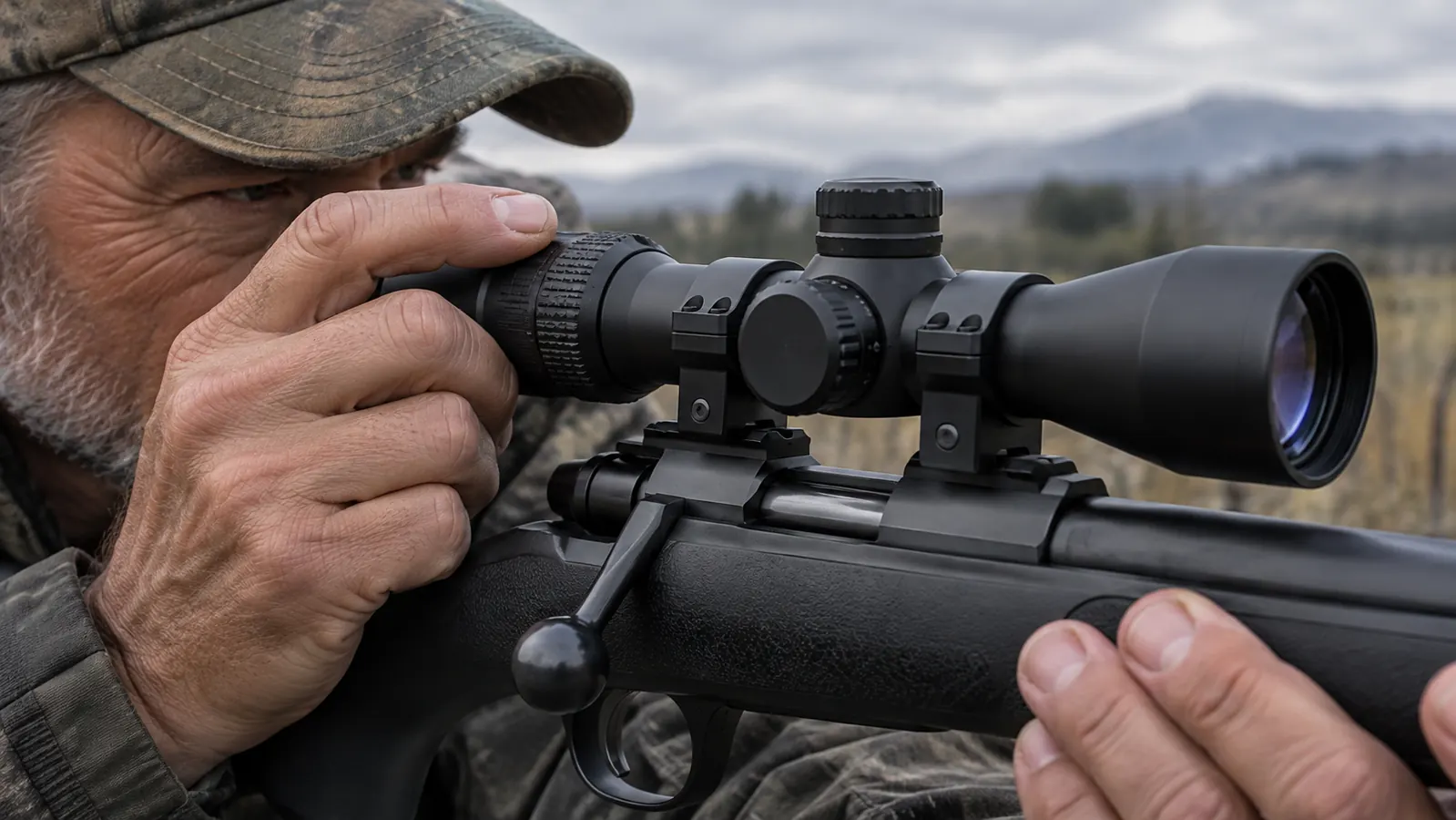
Here is the honest part. The Crossfire II is a budget-class scope, and the glass looks like a budget-class scope. It is clear in the middle, and it gets noticeably softer toward the edges. At dawn and dusk, which is when most deer actually move, you will see a little color fringing on branches against a bright sky. It is not terrible. It is just not a premium scope, and pretending otherwise does nobody any favors. I have compared it side by side with a friend's higher-end scope at the gravel pit, looking at the same steel gong at 100 yards in flat afternoon light. The difference is real. It is also smaller than the forums would have you believe, and at the distances I shoot, it has never cost me a shot.
What surprised me is how much of that disappears in real hunting light. In the timber, where shots are 50 to 150 yards and the light is flat, the Crossfire II is perfectly adequate. I have taken a mule deer at last light with this scope, and I could see exactly what I needed to see: the shoulder, the angle, and the spot behind the shoulder. I did not need to count the hairs on his neck. I needed to make an ethical shot, and the scope let me do that. The morning I knew I could live with this glass was a cold one in late October of 2024, when a whitetail doe stepped out of the alders at 90 yards with maybe ten minutes of legal light left. I could see her clearly enough to know she was a doe, and that was the whole job. I let her walk, but I remember thinking that with the old bargain scope I had before this one, I would have been guessing at whether she had antlers at all.
The 40mm objective is part of the story. A bigger objective lets in more light, but it also sits higher on the rifle and weighs more. For a hunter who walks public land all day, the 40mm is a reasonable trade. It gathers enough light for legal shooting hours in most timber, and it keeps the rifle light enough that you do not notice it after the first mile. I have carried this rifle up a switchback in the Selkirks with the scope on 3x and the lens caps on, and the whole rig balances about the same as it did with the iron sights I started with. If you are comparing this against a 44mm or 50mm objective, the difference on paper sounds small. On your shoulder at the end of a long day, it is not.
I have taken a mule deer at last light with this scope, and I could see exactly what I needed to see: the shoulder, the angle, and the spot behind the shoulder.
The Reticle: Dead-Hold BDC, Love It or Leave It
The Dead-Hold BDC reticle is the feature people argue about most, and both sides have a point. The reticle has a fine crosshair with additional hash marks below the center for holdover at longer ranges. On a .308 with a 100-yard zero, those hash marks roughly line up with 200, 300, and 400 yards. Roughly is the word to remember, and I learned that the hard way.
The hash marks are calibrated for a specific load and a specific barrel length, and your rifle is probably not that exact combination. My .308 shoots a little flatter than the reticle assumes, so my 300-yard hold is closer to the gap between the first and second hash marks. That is fine once you learn it. It is not fine if you assume the reticle is magic and never verify it on paper. I made that mistake in the fall of 2023. I put a three-shot group on paper at 300 yards using the first hash mark as my hold, and the group landed a full four inches high. I had already decided the reticle was off before I checked my notes and realized I had never actually confirmed what my load was doing past 200. I spent the next afternoon at the gravel pit with a box of ammunition, a notebook, and the 200-yard berm, and I wrote down exactly where each hash mark printed with my rifle and my load. That afternoon of work is the difference between a reticle that is a gimmick and a reticle that is a tool.
What nobody tells you: at 3x, the BDC reticle is busier than a plain duplex, and the hash marks can feel cluttered when a deer is standing in thick brush. I have never missed because of it, but I have noticed it. If you are the kind of hunter who keeps both eyes open at low power, the extra lines take a little getting used to. Give it a season before you decide you hate it. On the other hand, at 9x the hash marks shrink into proportion and the reticle gets out of the way. My habit now is to run the scope at 3x in thick timber and bump it to 6x or 9x when I settle into a shooting position. That works better than leaving it on one setting and complaining about the other.
Tracking, Zero Retention, and the Turrets
I have checked the zero on this scope before every season for three years, and it has never been off by more than a click or two. That is the most important thing a budget scope can do, and the Crossfire II does it. The adjustments are capped, which means you set them and forget them. That is the right design for a hunting scope. You are not dialing elevation in the field. You are holding on the hash marks and trusting the zero. I check the zero the same way every October: three shots at the 100-yard berm, one at the 200-yard berm, and a look at the target before I clean the rifle. The Crossfire II has never made me chase a group.
The clicks are positive and repeatable. I have tracked the adjustments with a tall-target test at the gravel pit, and the scope came back to zero every time. That is not something I can say for every scope I have owned, including one that was supposed to be a step up. The test is simple: you shoot a group, dial twenty clicks up, shoot again, dial twenty clicks left, shoot again, then dial back to zero and see where the last group lands. I did this on a calm March morning in 2024, and the scope returned to the same hole as the first group. That kind of repeatability is what makes a scope trustworthy at the moment it matters, and it is the reason I do not feel the need to baby this one.
One thing I will flag: the magnification ring is a little stiff when it is cold. I have had to work it with two fingers on a frosty November morning. It has never frozen solid, and it loosens up after a few turns, but it is worth knowing before you buy. If you plan to dial from 3x to 9x in a hurry, this is not the scope for that. I learned that on a November morning in 2023 when a buck came through a cut at 60 yards while the scope was on 9x from glassing the far ridge. I went to crank it down to 3x and the ring would not move with my glove on. I got my glove off, worked the ring down with two fingers, and found the buck again, but it cost me a couple of seconds I would rather not spend. Now I keep the scope on 3x in thick country and accept that the far ridge is what binoculars are for.
The Warranty Nobody Reads Until They Need It
Vortex backs the Crossfire II with an unlimited, unconditional lifetime warranty. I have never had to use it, which is the best thing I can say about any warranty. But I have read enough forum threads to know the stories: a guy drops his rifle, the scope lands on a rock, the glass shifts, and Vortex fixes it or replaces it without a receipt and without a lecture. That kind of warranty matters when you hunt the way I do, which is to say, not gently.
The warranty is also why I have recommended the Crossfire II to first-time hunters instead of a no-name scope. A no-name scope might hold zero for a season. The Vortex warranty means that if it does not, you are not out the money. For a guy on a budget, that is the difference between a tool and a gamble.
Pros and Cons
What I Liked
- Holds zero season after season, even after being bounced around in a pickup
- Capped, positive turrets that track true and return to zero
- Rings included in the box, which saves a first-time buyer a trip to the store
- Unlimited lifetime warranty from Vortex, no receipt required
- Light enough to carry all day on public land
- Dead-Hold BDC reticle is genuinely useful once you verify it against your load
Where It Falls Short
- Glass is soft at the edges and shows color fringing at dawn and dusk
- BDC hash marks are calibrated for one load, not your rifle
- Magnification ring stiffens up in cold weather
- Reticle feels busy at 3x in thick brush
- Not a scope for dialing long-range elevation in the field
Who This Is For
This scope is for the hunter I was ten years ago: the guy who needs a dependable 3-9x40, who hunts within 300 yards, and who would rather spend the savings on gas, tags, and ammo. It is for the first-time scope buyer who wants something that works out of the box, with rings included and a warranty that removes the risk. It is for the middle-aged hunter whose eyes are not what they were, who needs a clear sight picture at dawn, and who does not need to pretend he is shooting at 800 yards.
Who Should Skip It
Skip the Crossfire II if you hunt open country where shots run past 300 yards and you need to dial elevation in the field. The capped turrets and busy reticle are not built for that. Skip it if you are the kind of shooter who notices edge softness and color fringing and lets it ruin your day. The glass is honest about what it is, and it will not fool anyone into thinking it belongs in a higher class. And skip it if you want a scope you can leave on 9x and never touch. The Crossfire II is at its best when you use the whole magnification range.
Still the scope I put on my own .308
Three seasons in, the Vortex Crossfire II 3-9x40 has done everything I asked of it and nothing I did not. If you are shopping on a real budget, this is the one I would buy again.
Amazon Check Today's Price on Amazon →