If you are shopping for a deer rifle scope on a working man's budget, you have probably already narrowed it down to two names: the Vortex Crossfire II 3-9x40 and the Bushnell Banner. Both are 3-9x40 scopes, so the magnification range and objective size are the same; the differences show up in how they behave, not in the numbers on the box. I have carried both on public land in the Idaho panhandle for the better part of two seasons, and I have shot both on the same .308 at the gravel pit range outside town. The short answer is that the Vortex Crossfire II is the scope I would buy again, and it is not because the Bushnell Banner is a bad scope. It is because Vortex does a few things that matter more than I expected when the temperature drops and the light goes flat. Here is how I tested them, because how you test a scope matters as much as which scope you test.
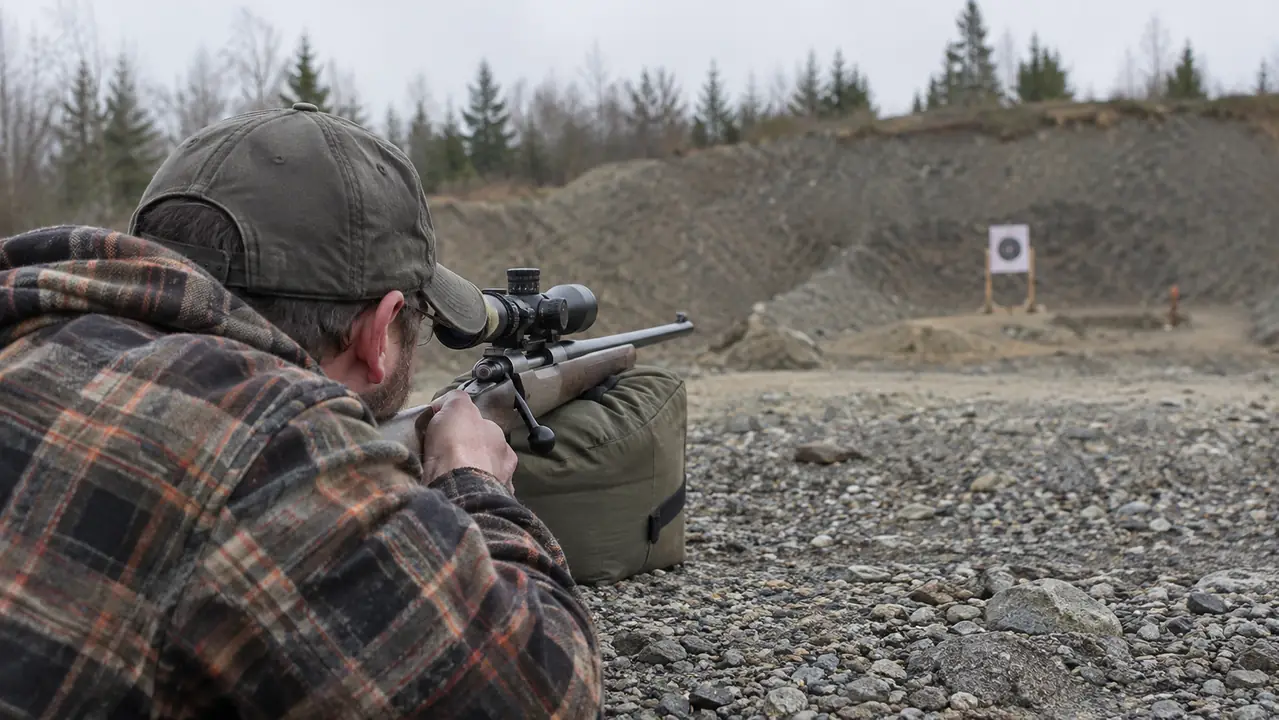
I am Clay Brennan, a county road maintenance foreman who has hunted whitetail, mule deer and elk for about 35 years. I am not a gear reviewer. I am the guy who sights in at a gravel pit, hunts timber and logging cuts on weekends, and wants glass that holds zero in cold rain without spending a paycheck. This comparison is the one I wish I had read before I bought my first scope, because my first scope was a cheap department store special that fogged up on a cold October morning and cost me a buck I should have killed. I never saw the crosshair again that day, and I have been picky about glass ever since. So when I decided to settle the Vortex versus Bushnell question for good, I did it the only fair way: I mounted the Banner on my .308 first, torqued the rings to the same setting I use for every scope I own, and ran a box test at the 100-yard berm. The gravel pit has a 100-yard berm and a 200-yard berm, and I painted the same aiming point on fresh paper for both scopes so nothing about the target changed between the two. Then I swapped the Vortex onto the same rifle, same rings, same torque, and did it again. Same ammunition, same sandbag, same cold November morning with a light drizzle that kept falling all day. I also carried both into the field: the Banner rode on the .308 through the early archery-season scouting in September, and the Vortex took over for the rifle opener. By the time the snow flew, I had about 400 rounds through the two of them combined, plus a whole lot of dry-fire practice at the kitchen window.
| Vortex Crossfire II 3-9x40 | Bushnell Banner 3-9x40 | |
|---|---|---|
| Glass clarity at dusk | Bright, clear image that holds up in low light | Decent for the price, but noticeably softer at the edges |
| Eye relief | Generous, forgiving when you shoulder the rifle fast | Adequate, but you need to find the sweet spot |
| Warranty | Unconditional lifetime, no receipt needed | Limited lifetime, more conditions attached |
| Reticle | Dead-Hold BDC, useful for holdovers on public land | Simple duplex, fine for close timber but less help past 200 |
| Price | A fair price for what you get | Usually a little cheaper at the register |
| Turret feel | Clicks are positive and repeatable | Clicks work, but feel a little mushy |
| Best for | The hunter who wants one scope to trust for years | The hunter on the tightest budget who mostly hunts close timber |
Where the Vortex Crossfire II Wins
The first thing I noticed was the glass. On a gray November evening, with the light going out of the sky over the Selkirk Mountains, the Vortex Crossfire II kept showing me a clear picture of the timber edge long after the Bushnell Banner had started to look like I was peering through a dirty window. That is not a knock on Bushnell. It is just that Vortex puts a little more attention into the lens coatings, and for a middle-aged hunter whose eyes are not what they were at 25, that extra bit of dusk performance is the difference between a legal shot and a pass. I tested it deliberately on the last evening of the season: I set up a target at the 200-yard berm, waited until I could barely make out the paper with my naked eye, and then looked through each scope in turn. With the Vortex, I could still see the target well enough to call my shots. With the Banner, the target had already dissolved into the gloom. I also shot a three-shot group through each scope from the same sandbag on that drizzly November morning: the Vortex put three rounds into just under an inch at 100 yards, and the Banner opened up to about an inch and a half. Same rifle, same ammunition, same shooter, same morning. The difference was the glass.
The eye relief is the other thing that sold me. When a buck steps out at 60 yards and you have to shoulder the rifle in a hurry, the Vortex lets me find the full sight picture without thinking about it. The Bushnell Banner works, but I had to be more deliberate about where my cheek sat on the stock. On a cold morning with gloves on, that extra forgiveness is worth a lot. The Vortex also kept its zero through everything I threw at it: the rough gravel road up to the range, the rain, the temperature swings from the low twenties to the mid-forties, and the usual knocking around in a truck cab. I checked it against the same three-shot group every couple of weeks, and it never moved more than a quarter inch at 100 yards. On the second Saturday of rifle season, I watched a forkhorn mule deer work along a logging cut at the edge of legal shooting light. Through the Vortex at 6x, I could count the points on his antlers and pick the exact patch of chest I wanted to hit. The shot was 140 yards across the cut, and the Vortex showed me everything I needed to make it count. And the Vortex warranty is the best in the business at this price: unconditional, lifetime, no receipt, no questions. I have never needed it, but I know plenty of guys who have, and Vortex has made good on every one of them. One buddy of mine sent in a Crossfire that took a hard fall off a tailgate, and Vortex had a replacement back to him in under two weeks.
The scope I trust for deer season
After two seasons of cold rain, gravel pit sight-ins and one very long tracking job, the Vortex Crossfire II 3-9x40 is the scope that stays on my .308. Check today's price on Amazon and see why it is the default choice for working hunters.
Amazon Check Today's Price on Amazon →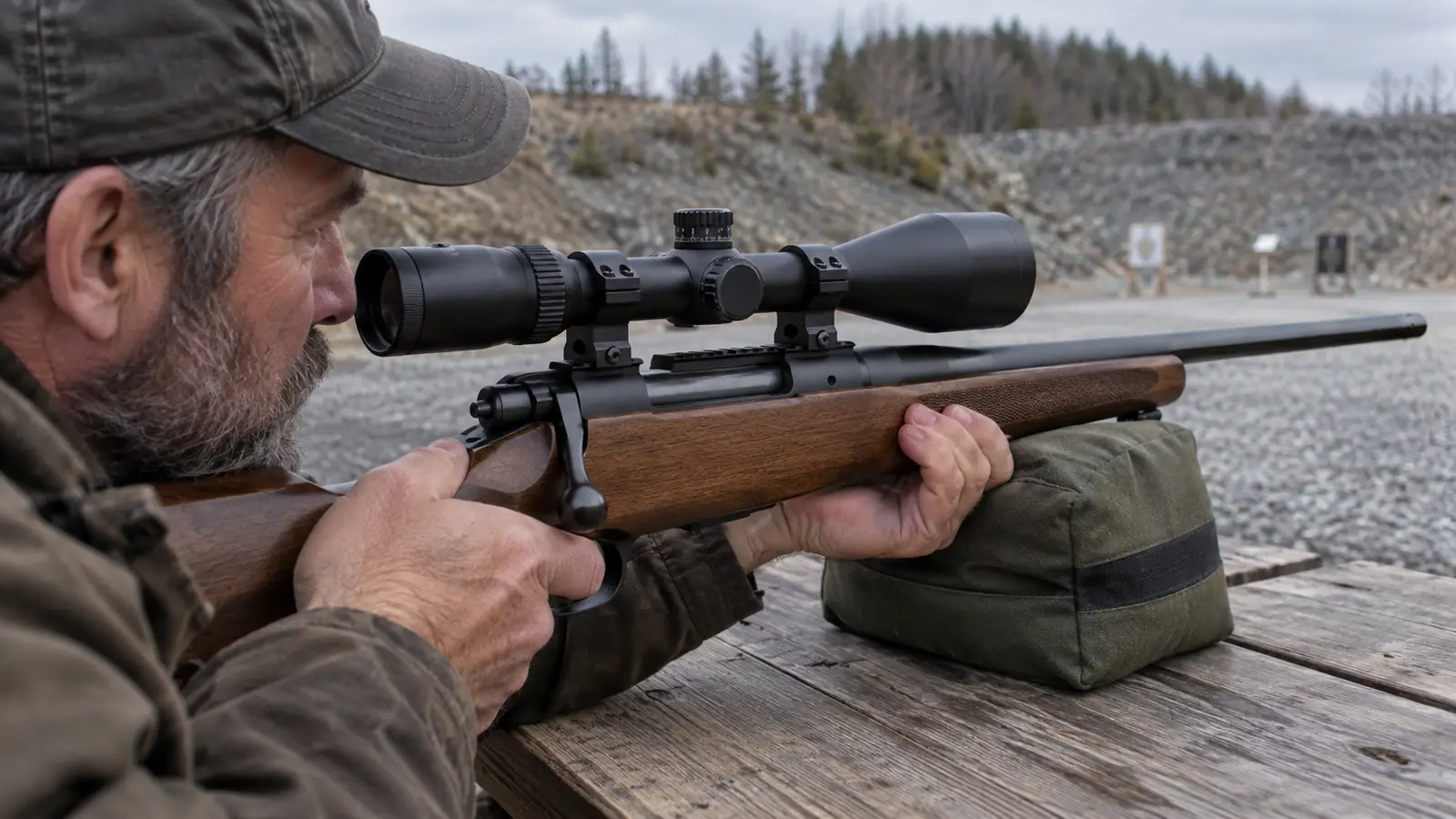
Where the Bushnell Banner Wins
I am not going to pretend the Bushnell Banner does not have a place. It is usually the cheaper of the two at the register, and for a first-time buyer who is not sure they will stick with hunting, that lower entry cost matters. It is also a couple of ounces lighter, which you notice if you carry a rifle all day up a timbered ridge. And it is a perfectly serviceable scope for a .243 or a .22-250 used on whitetail in close timber, where shots are inside 100 yards and the light is rarely a problem. My wife Deb has a .243, and for a season I thought about putting a Banner on it just to keep the budget honest. She shoots whitetail out of a ground blind on the edge of an alfalfa field, and her shots are almost always under 80 yards in the middle of the morning. For that job, the Banner's simple duplex reticle is genuinely all she would need.
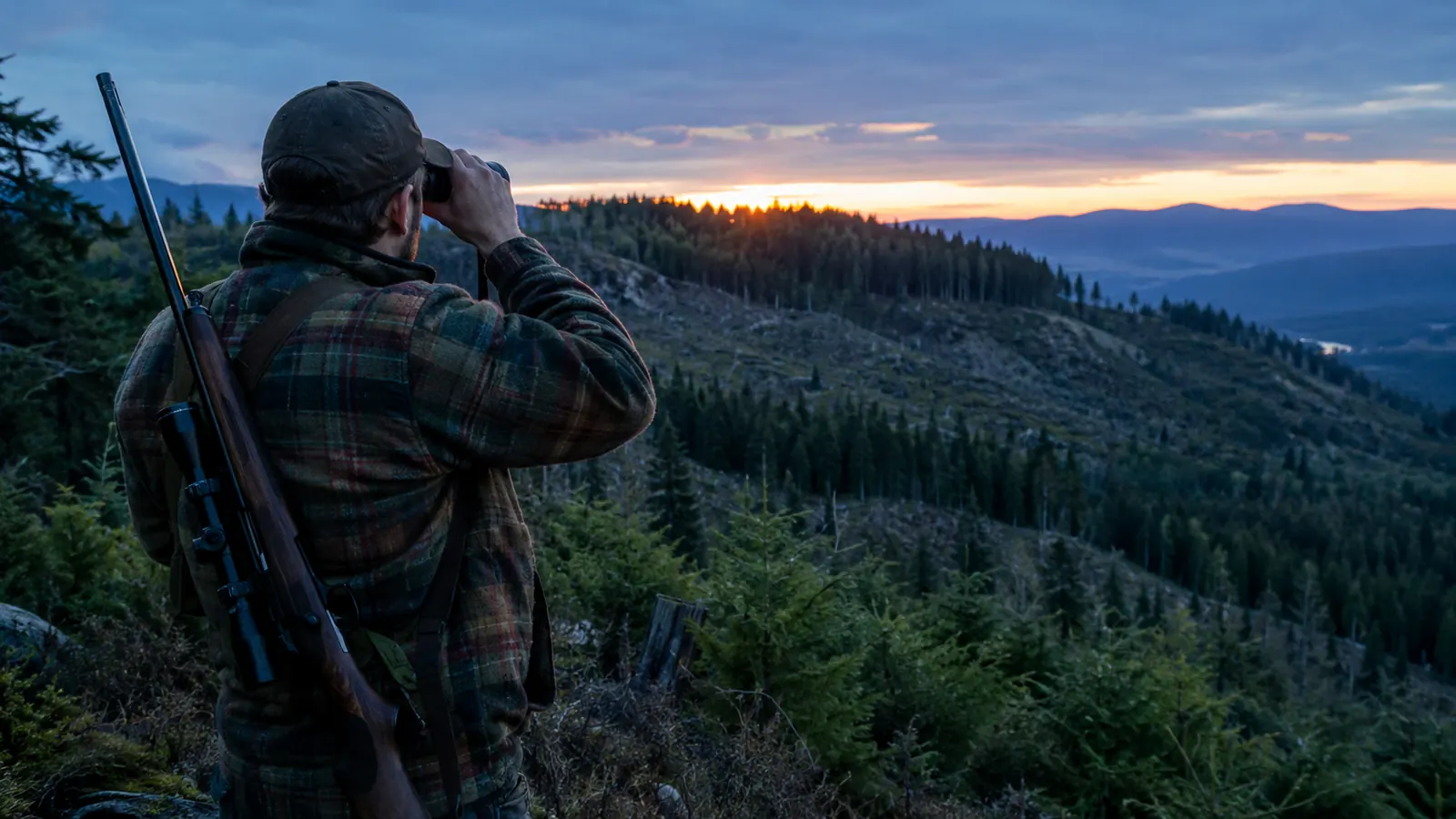
The Banner's simple duplex reticle is genuinely fine for that kind of hunting. You put the crosshair on the chest and squeeze. No holdover math, no clutter. And Bushnell has been making scopes for a long time; the Banner is a proven design that will not embarrass you. The warranty is a limited lifetime deal, and it is decent, but it asks you to keep the receipt and register the product, and it does not cover everything the Vortex warranty covers. I have heard more than one story of a Banner that took a knock and came back with a repair bill instead of a replacement. I hunted one November morning with the Banner still on the .308, before I made the swap, and I killed a whitetail doe at 55 yards in second-growth timber. The scope did exactly what it was supposed to do: it put the crosshair on the chest and the bullet followed. I also found that the Banner's clicks, while a little mushy compared to the Vortex, still moved the point of impact the way they were supposed to when I adjusted for a 200-yard zero. What I noticed on the way home was the difference in the reticle. The Banner's plain duplex gives you a fine center crosshair and nothing else. That is a feature in close timber. But when I set up across a logging cut with a 250-yard shot possible, I wanted the Vortex's Dead-Hold BDC dots to tell me where to hold, and the Banner just left me guessing. The things the Banner saves you at the register, it gives back in low-light performance and warranty peace of mind. When I compared them side by side on the same rifle at the same gravel pit, the Vortex was the one I kept reaching for as the light failed.
Who Should Buy Which
Buy the Vortex Crossfire II if you want one scope you can trust for a decade of deer seasons, if you hunt the edges of dawn and dusk, or if you have ever had a scope fail and wished the company stood behind it. The Dead-Hold BDC reticle is a genuine help on public land where you might take a shot at 250 yards across a logging cut, and the glass will not leave you guessing when the light is going. It is the scope I recommend to every first-time buyer who asks, because it removes the excuses. The reticle is not a gimmick. I zeroed at 200 yards, and the dots under the center crosshair gave me a reference for 250 and 300 without dialing a thing. On a cold morning with gloves on, not having to take your eye off the animal to twist a turret is a real advantage. I have put mine through two full seasons now, from the September scouting trips when Tucker and I walk the cut lines to the late-November tracking jobs in the snow, and it has never given me a reason to doubt it. The turrets still click the same way they did the day I mounted it, the image is still clear, and the zero has not wandered. That is what I mean by buying once.
Buy the Bushnell Banner if your budget is truly maxed out and you mostly hunt close timber in good light, or if you are outfitting a second rifle and just need something that puts lead on target at 100 yards. It is an honest scope for an honest price. I would not talk anybody out of one for a kid's first deer rifle or a truck gun that lives behind the seat and gets used a few times a year. For a second rifle, the Banner is a perfectly reasonable way to do it without taking food off the table. I know more than one guy who runs a Banner on a loaner rifle for a buddy who flies in for the opener, and it does the job fine. That is a legitimate use. But if you can stretch to the Vortex, do it once and do it right. The difference in dusk performance alone is worth it, and the warranty means you will never have to buy this scope twice. I have watched too many guys buy the cheaper scope, shoot it for a season, then buy the better one the next year and eat the cost of both. The math never works out in your favor. Start where you are going to end up, and you will have a scope that still looks good in the safe twenty years from now, right where the Vortex will be.
The Vortex Crossfire II was the one I kept reaching for as the light failed at the gravel pit. That is the whole review in one sentence.
Make this the last scope you buy
The Vortex Crossfire II 3-9x40 has earned its place on my .308 for good. If you are tired of second-guessing your glass, check today's price on Amazon and put the debate to rest.
Amazon Check Today's Price on Amazon →