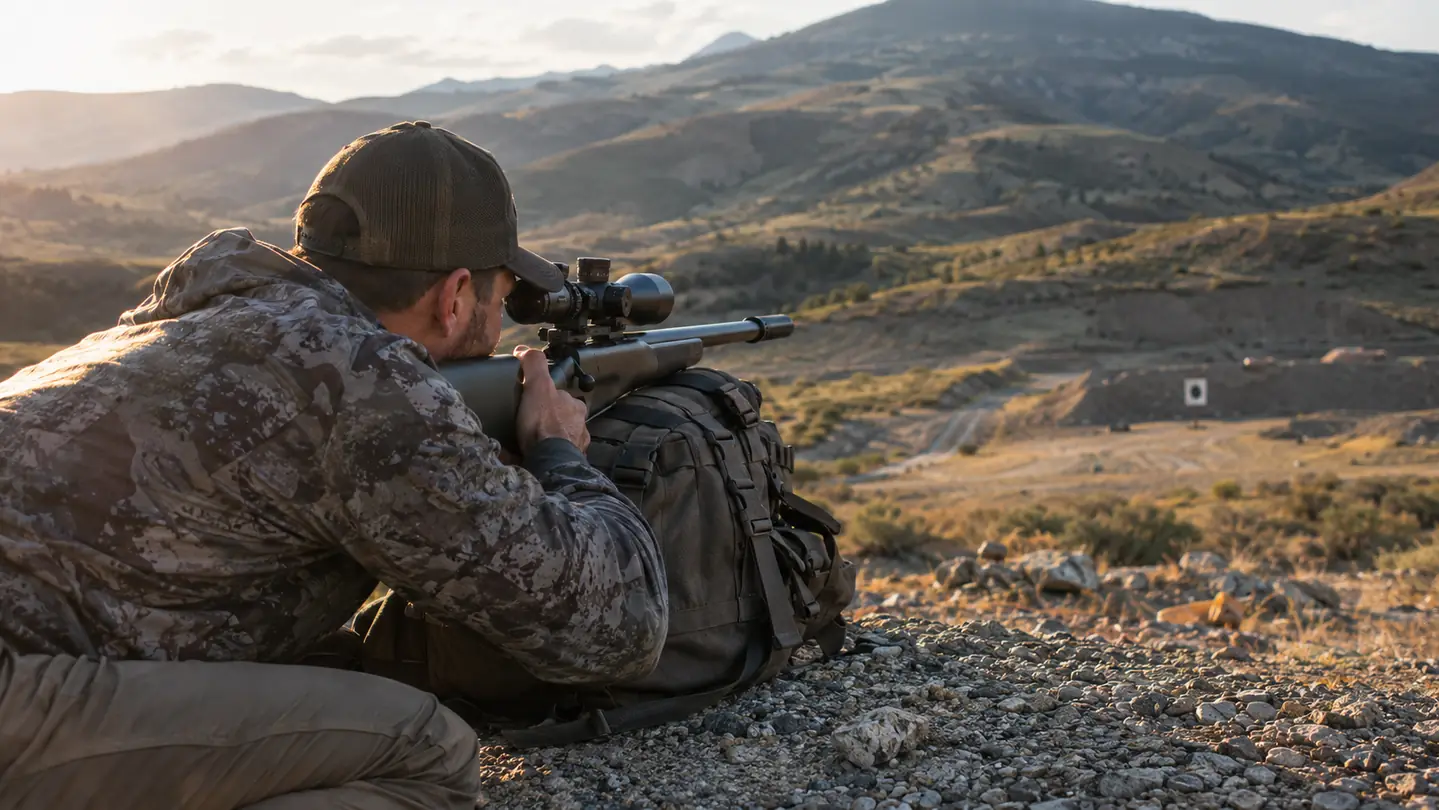
The first time I tried to stretch a shot past 250 yards, I held high and hoped. The buck was standing at the far edge of a logging cut, and I knew the drop was coming, but I did not know how much. I missed clean. That is how most of us learn the difference between a rifle that shoots flat and a shooter who knows his drops. A BDC reticle is not a magic answer, but it is the closest thing to a cheat sheet that mounts on a rifle, and the Vortex Crossfire II 4-12x44 Dead-Hold BDC is the one I have used for the last three seasons.
If you hunt the same kind of country I do, public land in the Idaho panhandle and western Montana, most of your shots are inside 200 yards. But every season has that one morning when a buck steps out at 280 and gives you time to think. You can pass, and sometimes you should. If you want the option to shoot, you need a reticle you actually understand, not one you vaguely trust. Here is how I set mine up and how I use it in the field.
A BDC reticle only helps if you know what each hash means for your rifle
The Vortex Crossfire II 4-12x44 Dead-Hold BDC gives you a clean, uncluttered reticle with four holdover marks below center. I have used this scope on my .308 for three seasons, and it has held zero through cold rain, pack horses, and more gravel-pit sessions than I can count. If you want the same setup, check today's price on Amazon.
Amazon Check Today's Price on Amazon →Step 1: Understand What the BDC Reticle Actually Shows You
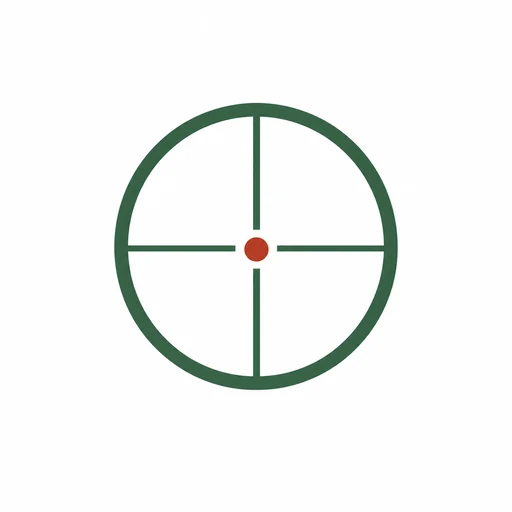
The Dead-Hold BDC reticle in the Vortex Crossfire II is a duplex-style reticle with four dots below the crosshair. The center crosshair is your zero. The first dot below it is your 200-yard holdover, the second is 300, the third is 400, and the fourth is 500. That is the theory. The reality is that those numbers are based on a specific cartridge, a specific barrel length, and a specific zero distance, and your rifle is probably not that exact combination.
Vortex designs the reticle around a common .308 or .30-06 load with a 100-yard zero, but your bullet weight, your muzzle velocity, and your altitude all shift the numbers. My .308 shoots a 165-grain bullet at about 2,700 feet per second, and at 300 yards the second dot is close to dead on. My buddy's .243 with a lighter bullet needs to hold a hair high at the same distance. The reticle is a starting point, not a promise.
The point of Step 1 is to stop treating the dots as gospel. They are reference marks. Your job is to find out what each one means for your rifle, and that means a trip to the range with a notebook. I learned this the hard way on a November morning in 2022, when I held the 300-yard dot on a mule deer at the far side of a clearcut and watched the bullet kick up dirt a full six inches low. The dot was not wrong. My assumption that it matched my load was wrong. That miss cost me a tag and taught me more than any reticle diagram ever did.
Step 2: Zero at 100 Yards First
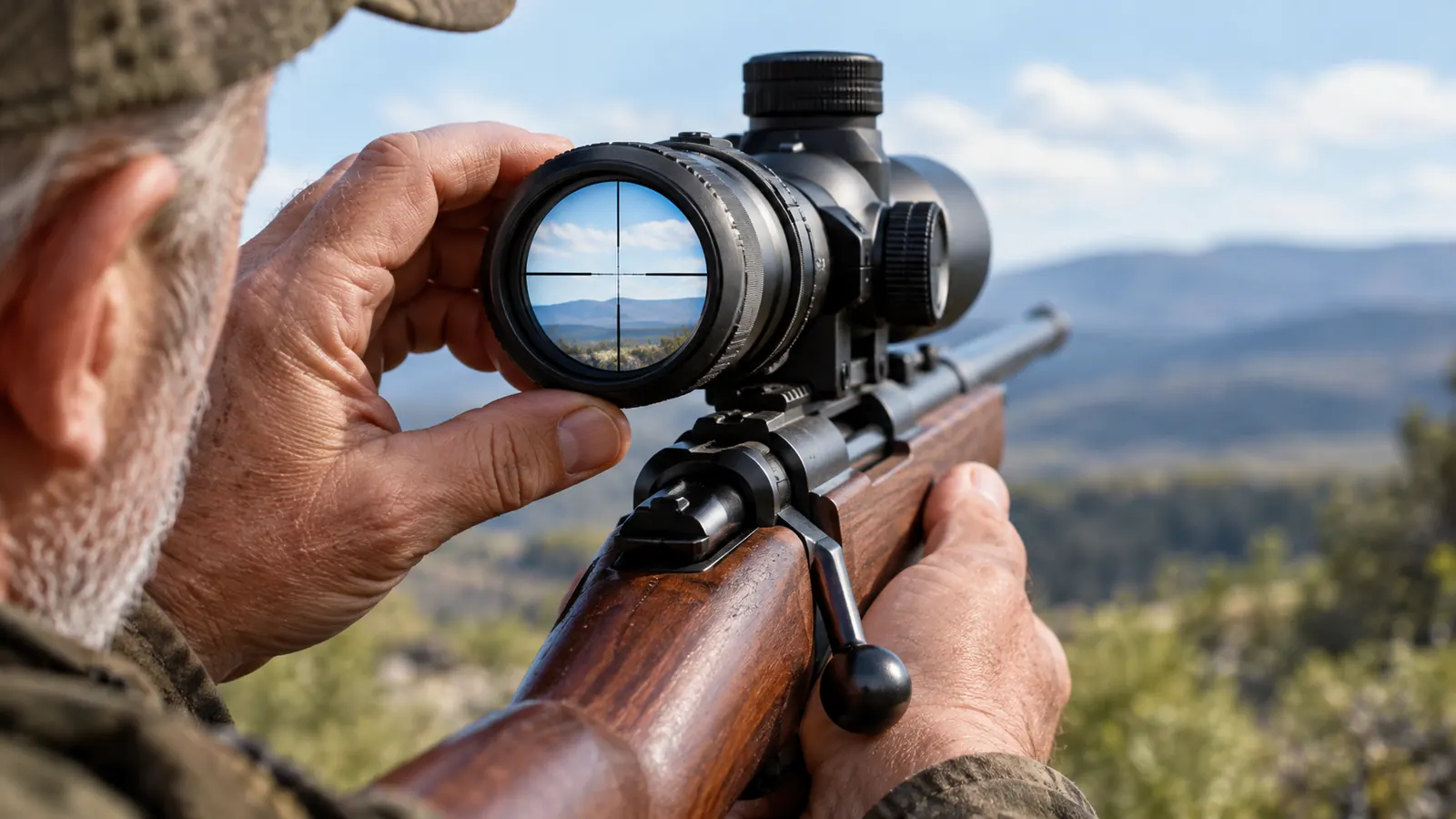
Before you touch the holdover dots, get your center crosshair dead on at 100 yards. I do all my initial sight-in at a gravel pit range outside town with a 100-yard and a 200-yard berm. I shoot from a solid rest, three-shot groups, and I do not touch the turrets until the group is where I want it. The Vortex Crossfire II has capped turrets with a zero-reset function, so once you are dialed in, you can loosen the cap, turn the dial back to zero, and retighten. That way your turret numbers always match your actual zero.
A 100-yard zero is the right choice for most hunting rifles. It keeps your point of impact within a couple inches of your point of aim from the muzzle out to about 220 yards with a typical .308 load. That means inside 200 yards, you can hold dead on and not think about holdover at all. The BDC dots only come into play when the shot goes past your point-blank range.
One thing I have learned the hard way: do your zeroing in the conditions you will hunt in. Two seasons ago I sighted in on a hot August afternoon, then hunted the opener in a cold November rain. My first group at 200 yards printed three inches low and two inches left. It was not a scope problem, it was a physics problem. I recheck my zero every season before the opener, and I always shoot a couple of groups at 200 yards to confirm the first dot. That one habit has saved me more than one hunt.
Step 3: Confirm Each Dot at the Range
This is the step most hunters skip, and it is the one that makes the reticle worth having. Set up targets at 200, 300, and 400 yards if your range allows it. Shoot a group at each distance using the corresponding dot, not the center crosshair. Write down what you see. If the 300-yard dot prints 2 inches low with your load, you know to hold a hair high. If it prints 2 inches high, you know to hold a hair low. That notebook entry is worth more than any reticle diagram.
At my gravel pit, I have a 200-yard berm but not a 300-yard one, so I do my longer confirmation on a friend's property in western Montana. I shoot from a bipod or a pack, the same way I would in the field, and I always shoot at least three shots per distance. One lucky shot does not tell you anything. Three shots that group together tell you what the rifle and the reticle will do when your heart rate is up and the light is going. Last fall I spent a Saturday morning on that property with a target at 300 yards. The first group with the second dot printed four inches high. I held a hair low for the second group and put three rounds inside a five-inch circle. That is the whole point of the exercise: you learn the correction before you need it.
If you cannot get access to a 300-yard range, you can still make the reticle work. Use a ballistics calculator to estimate your drop at each distance, then confirm what you can at 200. The closer you can get to real-world confirmation, the more confidence you will have when the shot matters.
Step 4: Learn to Read the Wind and the Angle
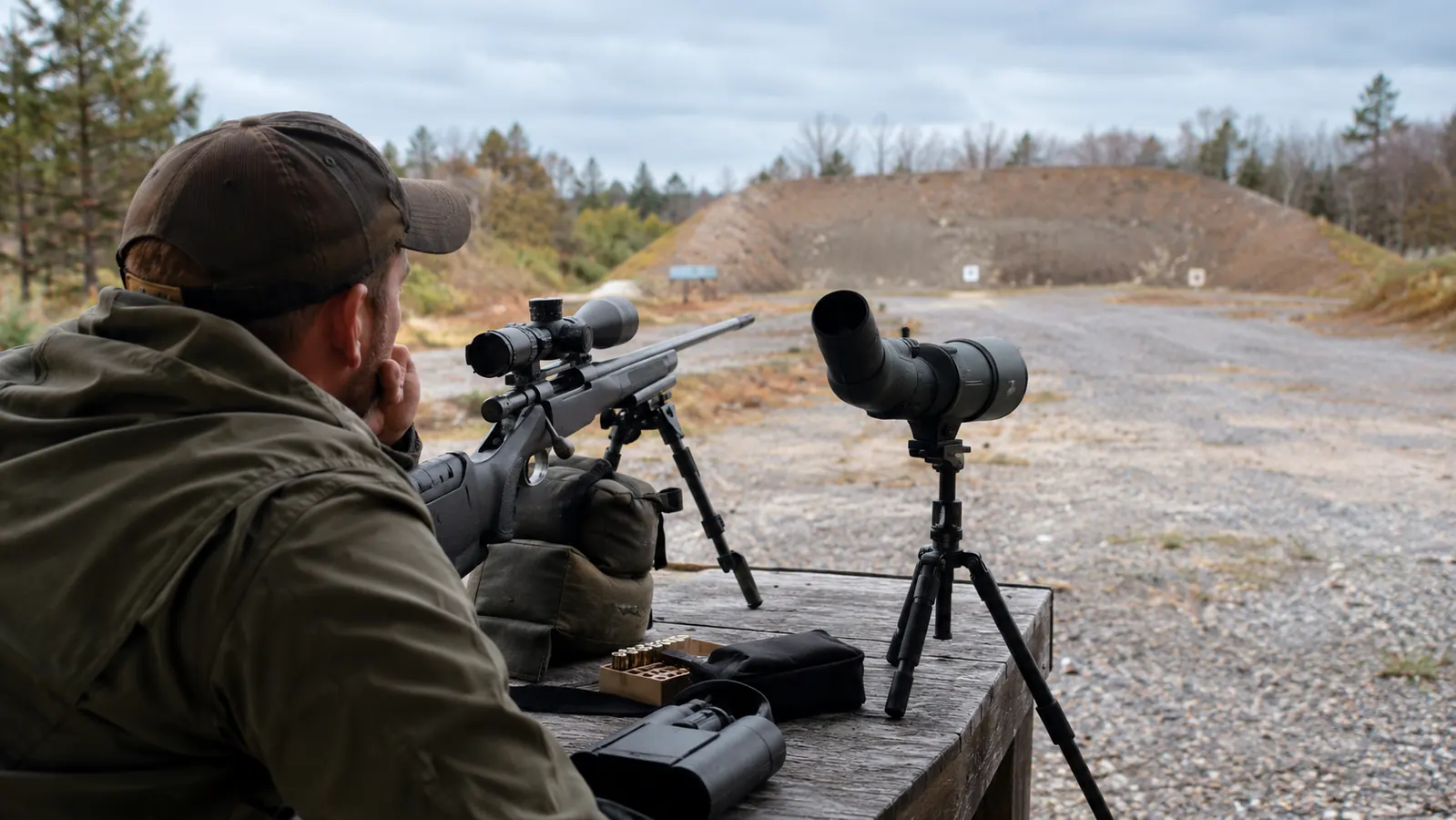
A BDC reticle only accounts for bullet drop. It does nothing for wind drift, and it does nothing for uphill or downhill angles. That is where the reticle can get a hunter in trouble if they trust it too much. At 300 yards, a 10 mph crosswind can push a .308 bullet several inches off target. The reticle will not show you that. You have to read the wind yourself, using mirage, grass movement, and the way your scope's image shimmers.
For uphill and downhill shots, the rule of thumb is that the bullet drops less than the actual distance suggests. A 300-yard shot at a steep angle behaves more like a 250-yard shot. The BDC dot for 300 will print high. I have missed a buck high on a steep canyon shot because I trusted the dot instead of the angle. That was in 2021, a mule deer at 290 yards across a draw, and I held the 300 dot right on his shoulder. The bullet sailed over his back. Now I hold a little low on steep shots and I confirm my holds with a rangefinder that gives angle-compensated distance.
The practical takeaway: the BDC reticle is a drop-compensating tool, not a wind-compensating one. Use it for what it is good at, and keep practicing the skills that no reticle can give you. Wind reading is a feel you build one range session at a time, and there is no shortcut around it.
Step 5: Practice the Way You Hunt
The last step is the one that separates a shooter from a guy who owns a rifle. Do not just shoot from a bench. Shoot from a kneeling position, from a sitting position, from a pack, from a tree stand rail, from whatever position you will actually use in the field. I practice at the gravel pit with a target at 200 yards, and I force myself to get into position, find the target in the scope, and settle the crosshair before I even think about the trigger. I time myself too. If I cannot get a solid hold inside thirty seconds from a cold start, I am not ready for the shot that matters.
I also practice in low light. The Vortex Crossfire II has a decent 44mm objective and a fully multi-coated lens, which helps at dawn and dusk, but the real test is whether you can pick up the reticle against a dark treeline. I have found that the Dead-Hold BDC reticle stays visible in low light better than a thin crosshair, because the thicker outer posts draw your eye to center. That matters when a buck appears at last light and you have seconds to decide. One evening last October I had exactly that: a whitetail at 210 yards, fifteen minutes before the end of legal shooting light. I could see the reticle clearly against the dark timber, held the center crosshair, and made the shot. That is the kind of confidence the practice builds.
One more habit that pays off: dry-fire practice in the living room. I pick a small object across the room, mount the rifle, and practice settling the reticle on it from a standing position. It is not glamorous, but it builds the muscle memory that makes the real shot feel automatic. I do ten dry fires most evenings during the off-season, and by October the mount and the settle feel like the same motion every time.
What Else Helps
A BDC reticle works best when the rest of your setup is honest with you. A good rangefinder is the first thing I would add, because the reticle only helps if you know the distance. A solid bipod or a shooting pack gives you a stable platform, and a notebook and pen are the cheapest accuracy tools you will ever buy. I also keep a small ballistics card taped to the inside of my scope cap, with my confirmed drops at 200, 300, and 400 yards for my specific load. That card has saved me more than once when the wind was up and my memory was fuzzy. I write the entries in pencil, because rain smears ink, and I replace the card every season when I recheck my zero.
The BDC reticle is a starting point, not a promise. The dots only mean something after you have confirmed them with your rifle, your load, and your conditions.
Give yourself the confidence to take the shot you are sure about
The Vortex Crossfire II 4-12x44 Dead-Hold BDC has been on my .308 for three seasons, and it has never let me down. It is not the most expensive scope on the shelf, and it does not need to be. If you want a reticle that gives you a clear plan at 200, 300, and 400 yards, check today's price on Amazon.
Amazon Check Today's Price on Amazon →