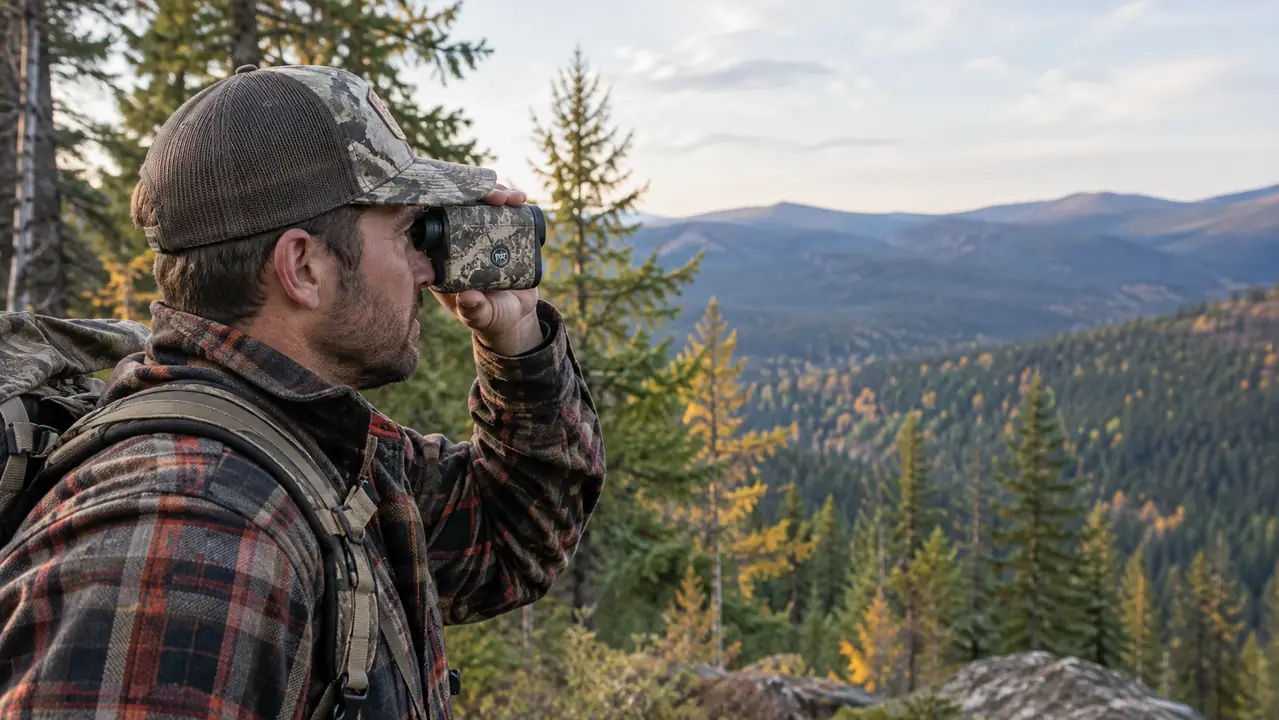
The deer was 40 yards inside the timber, quartering away, and I had no idea if the shot was 180 yards or 240. That gap is the difference between a clean kill and a gut-shot deer that runs a mile. I've hunted whitetail, mule deer and elk in the Idaho panhandle for about 35 years, and I can tell you the exact moment I stopped guessing: the day I started carrying a rangefinder on every single hunt. The TIDEWE Hunting Rangefinder is the one I've used for two full seasons now, and this is how I range a deer through timber with it, step by step, the way I actually do it in the field.
Most of my shots are 50 to 300 yards, and most of them happen in timber and logging cuts where the deer is half hidden behind branches, a stump, or a blowdown. A rangefinder that can't pick a deer out of that mess is just a heavy thing in your pocket. The TIDEWE has a scan mode that keeps updating the distance as you sweep across the animal, and that one feature changed how I hunt more than any scope I've ever owned.
Stop Guessing the Distance. Start Making Clean Kills.
The TIDEWE Hunting Rangefinder ranges deer through timber, brush, and low light without breaking the bank. It's the rangefinder I carry every hunt now.
Amazon Check Today's Price on Amazon →Step 1: Get Into Position Before You Ever Raise the Rangefinder
The biggest mistake I see new hunters make is raising the rangefinder the second they see a deer. That movement is what spooks the animal, not the laser. Deer have incredible peripheral vision, and a sudden arm raise at 150 yards will put a whitetail into the next county before you ever get a reading. I've watched it happen more times than I can count, including to me in my twenties.
Instead, I get my body into a stable position first. If I'm standing, I find a tree trunk to brace against, or I drop to a knee behind a log. I tuck my elbows into my ribs. I take a breath and let half of it out. Only then do I bring the rangefinder up, and I bring it up slow, straight in front of my face, not out to the side where the deer can catch the motion. The TIDEWE is light enough that I can hold it steady one-handed against a tree, but two hands is always better when the light is flat and the deer is deep in the timber.
This is also the moment I decide whether the shot is even on. If the deer is moving, I wait. If it's facing me, I wait. I want the animal broadside or quartering away, standing still, with a clear path for the bullet. Ranging a deer you're not going to shoot is practice, and practice is fine, but it's not worth spooking the one you want.
Step 2: Find the Deer With Your Eyes First, Then the Rangefinder
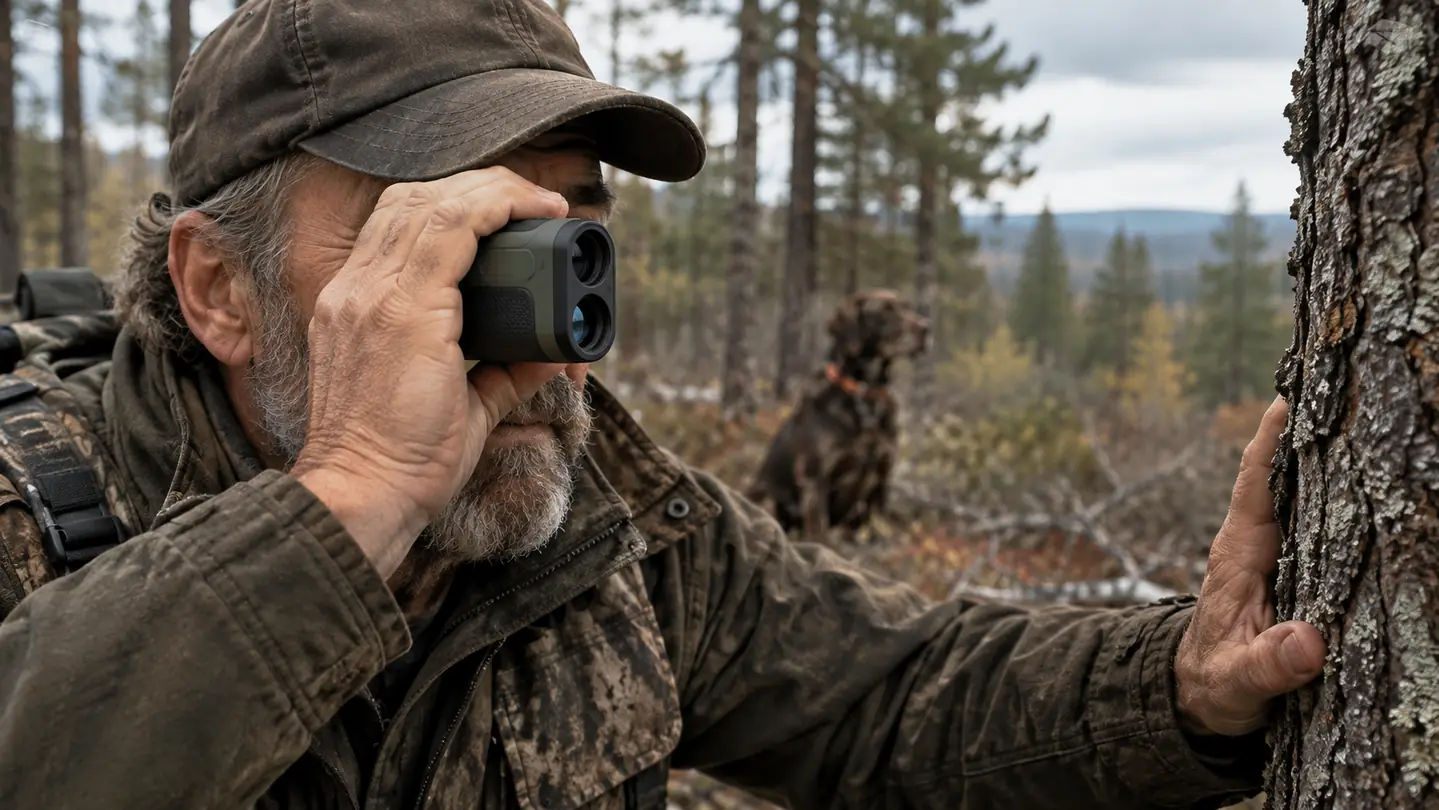
Here's the trick that took me years to learn: never look through the rangefinder until you already know exactly where the deer is. I pick the animal out with my naked eyes, fix on the spot between its shoulder and its chest, and keep my eyes locked there while I bring the rangefinder up. If I lose the deer in the viewfinder, I lower the unit, find it with my eyes again, and start over. Trying to search for a deer through a 6x viewfinder in timber is how you range a stump, a rock, or a patch of dead grass.
The TIDEWE's display is bright enough to read in flat timber light, which matters more than you'd think. I've used rangefinders where the numbers washed out against a dark treeline, and you end up holding the thing for ten seconds trying to read the yardage while the deer walks off. With the TIDEWE, I get the number, drop the unit, and get on the rifle. The whole sequence, from first seeing the deer to having the yardage in my head, is usually under five seconds.
One more thing on this step: range the deer, not the trees around it. A laser will bounce off the first solid thing it hits, and in timber that's often a branch ten yards in front of the animal. If the reading seems short for where the deer is standing, sweep the beam across the animal's chest a few times and take the longest consistent number. That's the one that matches the deer.
Step 3: Use Scan Mode to Sort the Deer From the Brush
This is where the TIDEWE earns its keep. In scan mode, the rangefinder keeps taking readings as you move it, and the display updates continuously. I start on the deer's chest, then sweep slowly across the animal and past it into the open timber behind. The readings jump around, branches at 40 yards, a stump at 90, the deer at 187, a tree at 210. The deer shows up as a consistent number that repeats as I sweep back across it. That repetition is what tells me I've got the animal, not a branch.
I've ranged deer through light brush, through a screen of saplings, and across a creek bottom with this method. The TIDEWE's scan mode updates fast enough that I can catch the deer's number between the brush readings. It took me a few hunts to trust the repeating number instead of the first one I saw, but now I don't even bother with single-shot mode in timber. Scan mode is the only mode I use until the deer is down.
A note on ethics: if I can't get a consistent reading on the deer, I don't take the shot. A rangefinder that won't lock onto the animal is telling me the lane is too full of brush for an ethical shot anyway. The tool isn't there to talk me into a shot I shouldn't take. It's there to tell me the truth about the distance, and sometimes the truth is that I need to wait for the deer to step into a gap.
Step 4: Read the Number, Then Build Your Shot Plan Before You Move
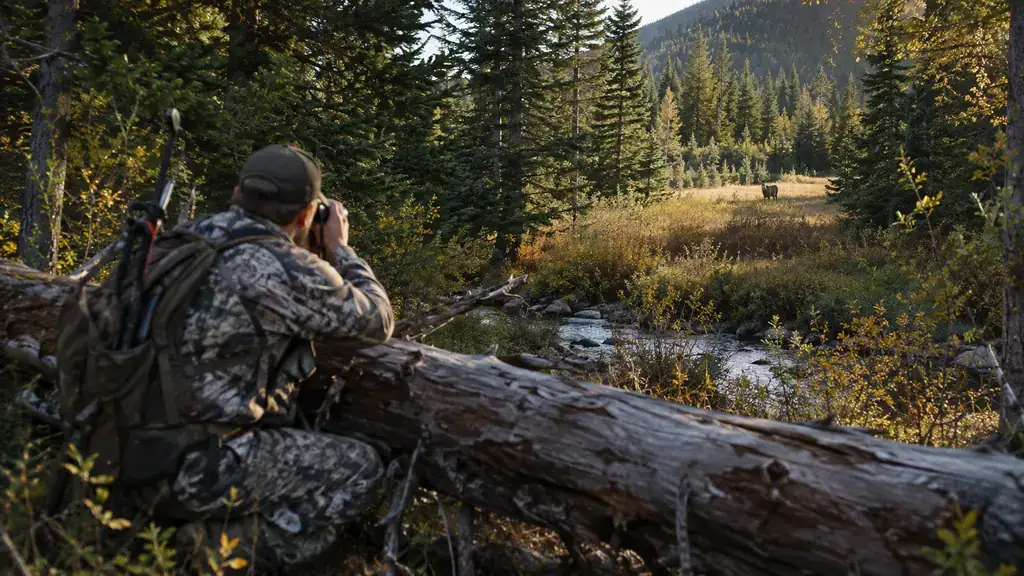
Once I have the yardage, I don't move. I stand there and build the whole shot in my head before I touch the rifle. I know my .308's drop at 200, 250, and 300 yards because I've shot it at the gravel pit range outside town until those numbers are baked in. The rangefinder gives me the distance, and my brain does the rest: hold a little high at 250, dead on at 200, and so on. The TIDEWE reads out in one-yard increments, which is more precision than I need, but it means I'm never doing mental math on a rounded number.
This is also when I check the wind and the light. Timber blocks wind, but it also funnels it through gaps, and a 15 mph gust through a logging cut will push a .308 bullet more than most hunters think. I look for the direction the branches are bending, and I adjust my hold accordingly. The rangefinder can't help me with that part. No rangefinder can. But knowing the exact distance means wind is the only variable I'm guessing at, and that's a much better position to be in.
If the deer is inside 200 yards, which most of my timber shots are, I'm already thinking about where the deer will go after the shot. I pick a gap in the timber where I expect to see it if it runs, and I plan to watch that gap, not the spot where the deer was standing. That habit has saved me more tracking jobs than I can count, and it starts with having the distance settled so my brain is free to think about the next thing.
Step 5: Range the Deer Again Before You Shoot, Every Time
Deer move. The deer that was at 187 yards when I first ranged it is often at 210 by the time I'm settled behind the rifle, especially if it's feeding slowly through the timber. I range it again right before the shot, from the shooting position, with the rifle resting on my pack or a stump. The TIDEWE is small enough that I can keep it in a chest pocket and have it out in seconds without shifting my body enough to spook the deer.
The second reading is the one I trust. The first reading tells me the deer is in range and worth setting up on. The second reading, taken from the actual shooting position, is the number I dial into my scope or hold for. I've had the two readings differ by 30 yards or more on a deer that was walking through timber, and 30 yards is the difference between a perfect shot and a wounded animal at the edge of my comfortable range.
If the deer is still moving when I'm ready, I wait for it to stop. I don't range a walking deer and then shoot at the spot where it was. I range it standing, I confirm the number, and I shoot. That's the whole system, and it's the same system I use on mule deer in the high country and whitetails in the river bottoms. The TIDEWE has been through two Idaho winters with me, including a November hunt in cold rain where I was sure the battery would die. It didn't. The rechargeable battery held up, and the unit kept giving me clean readings right up until dark.
What Else Helps
A rangefinder is one piece of the system, not the whole system. I pair the TIDEWE with a good set of binoculars for finding deer in the first place, and I keep a small notebook in my pack with the drop numbers for my .308 at every 25 yards from 100 to 400. I also practice ranging things that aren't deer: stumps, fence posts, the far berm at the gravel pit. When I can call the distance to a stump within a few yards from memory, I know I'm reading the rangefinder right. And I always range the deer twice, once when I see it and once from the shooting position, because the second number is the one that matters.
The first reading tells me the deer is in range. The second reading, from the shooting position, is the number I trust. Thirty yards can be the difference between a clean kill and a long tracking job.
Range Deer Through Timber With a Rangefinder That Works
The TIDEWE Hunting Rangefinder has been in my chest pocket for two seasons. It ranges deer through brush, reads clearly in flat light, and the battery lasts through a week of hunts. If you're still guessing distances, this is the fix.
Amazon Check Today's Price on Amazon →