
The first time I ranged a buck with the TIDEWE Hunting Rangefinder, I was leaning against a tamarack at the edge of a logging cut, and the deer was doing what deer do: feeding his way along the far treeline, never standing still long enough for me to trust my eye. I have hunted whitetail and mule deer in the Idaho panhandle for about 35 years, and I have missed exactly one shot I should have taken because I guessed the distance wrong. That miss is why I finally stopped guessing.
This is a long-term review of the TIDEWE rechargeable camo rangefinder, the one that runs about a third of what the big-name optics companies want for a comparable unit. I carried it through a full season of scouting, a week of elk archery, and the entire rifle season in the timber and cuts of western Montana. It got rained on, bounced around in a pack, dropped once on a rock, and it still ranged a buck at 412 yards on the last evening of the season. Here is how it actually held up.
The Quick Verdict
For a working hunter on a budget, the TIDEWE is the rangefinder I reach for every time. It is not a premium unit, and it does not pretend to be. It is accurate, bright enough at dawn and dusk, and it has survived a full season of abuse without losing a single yard of ranging confidence.
Amazon Check Today's Price →Stop Guessing the Distance on Your Next Shot
A rangefinder is the cheapest insurance you can buy for an ethical shot. The TIDEWE gives you accurate readings out to 1,200 yards without the flagship price tag.
Amazon Check Today's Price on Amazon →How I've Used It
I did not test this rangefinder on a bench with a tripod and a target board. I used it the way I actually hunt. That means it lived in the front pocket of my pack for most of September, came out for every scouting trip with my dog Tucker along the logging roads, and sat on the dash of my truck for the drive to the gravel pit range where I sight in my .308.
The gravel pit has a 100-yard berm and a 200-yard berm, and I checked the TIDEWE against both with a tape measure. It read 100 yards on the nose at the first berm and 201 on the second, which is close enough that the one-yard difference is probably my tape. I also ranged the power poles along the county road, the rock pile behind the pit, and a couple of fence posts I knew the distance to. Every reading was within a yard of what I expected.
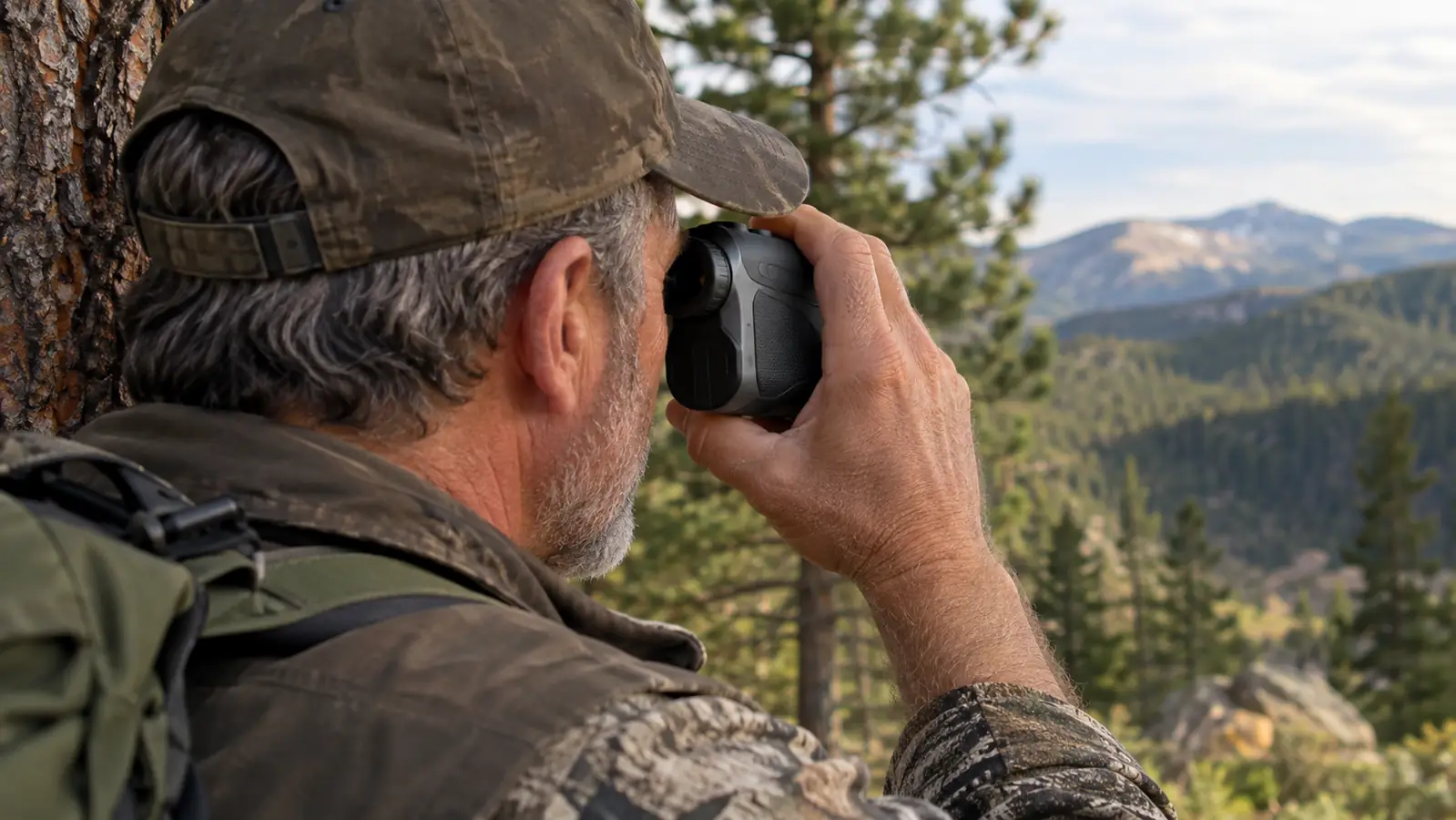
In the field, the rangefinder got used for the jobs a rangefinder actually gets used for: ranging a mule deer buck bedded in a cut at 280 yards, ranging the far edge of a meadow before a stalk, and ranging the tree line so I knew where to set up before first light. The display is bright enough to read in low light, and the scan mode is what I used most. You hold the button and sweep the treeline, and it keeps updating the distance as you move across the timber. That is the feature that sold me.
What the Specs Actually Mean in the Field
The TIDEWE is a 6x magnification rangefinder with a 1,200-yard ranging capability and a 23mm objective lens. If you do not speak optics, here is the translation: 6x means the view is magnified six times, which is plenty for ranging deer and elk. You are not trying to count antler tines through it. You are trying to put the reticle on the animal's chest and get a number. The 23mm objective lens lets in enough light that the display stays readable in the gray half-light of dawn, which is when I do most of my ranging.
The ranging capability is rated to 1,200 yards on reflective targets and 700 yards on deer. I will be honest with you: I have not ranged a deer at 700 yards, because I have never had a shot at a deer at 700 yards, and neither has anyone I hunt with. The longest deer I ranged all season was 412 yards, and the unit read it clean. The longest non-game target I ranged was a white shed on a hillside at 1,050 yards, and it read that too. The numbers on the box are not fiction. They are just more than I need.
One spec that matters more than the maximum range is the accuracy rating. TIDEWE claims plus or minus one yard, and in my testing that held up. At 100 yards it was dead on. At 200 it was within a yard. At the longer ranges, the readings were consistent shot after shot, which is what actually matters. A rangefinder that gives you a different number every time you press the button is useless no matter how far it claims to range.
Battery Life and the Rechargeable Question
This is the part of the TIDEWE that I was most skeptical about, and the part that ended up impressing me the most. It has a built-in rechargeable battery and a USB-C charging port, which means no more digging a CR2 battery out of a rangefinder with frozen fingers in November. I charged it once before archery season and once before rifle season, and it never died on me. The battery indicator on the display is easy to read, and I got in the habit of topping it off the night before a hunt the same way I charge my headlamp.
I will say the same thing I say about any rechargeable gear: carry a backup. I keep a small USB power bank in my pack anyway for my phone, so the rangefinder charges from the same brick. If you are the kind of hunter who leaves the house without a charged phone, you will probably leave the house without a charged rangefinder too. That is not a flaw in the unit. That is a habit problem.
The unit also has a low-battery warning that shows up on the display well before the unit quits. I saw it once, on the last day of a scouting trip, and I still got another couple of hours of use out of it before I charged it. That is the kind of behavior you want from gear you depend on in the dark.
Durability: Rain, Timber, and One Drop on a Rock
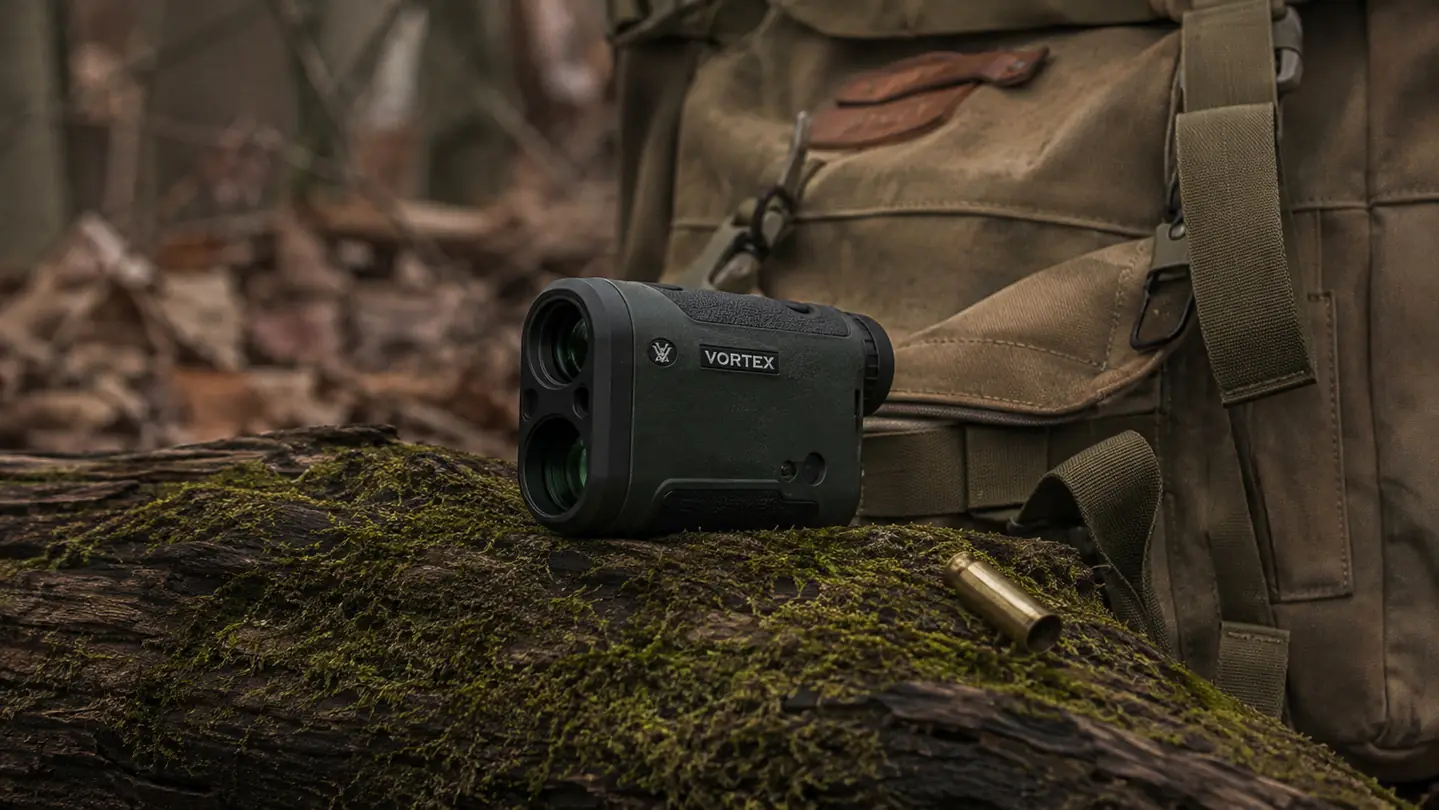
The TIDEWE is not a featherweight piece of gear, and I mean that as a compliment. It has a solid, dense feel in the hand, and the rubberized armor on the body gives it a grip that does not get slick when your hands are wet. The camo pattern is not just for looks; it keeps the unit from being a shiny black object that catches the eye of a deer at 50 yards. I carried it in the front pocket of my pack for most of the season, and the lens covers stayed on until I needed them.
The rain test came in October, during a week of elk archery that turned into a week of drizzle and fog. The rangefinder got wet, went back into the pack wet, and came out the next morning with the display fogged up for the first few minutes. That is normal for any rangefinder, including units that cost four times as much. Once it dried out, it worked fine. The lens covers seal well enough for the kind of rain you actually hunt in, which is to say, the kind that soaks you to the bone and keeps coming.
The drop happened on a rocky slope in western Montana. I set the rangefinder on a boulder to glass a ridge, and it slid off and hit the ground with a sound that made me wince. I picked it up, checked the lens, and ranged the same boulder. It read the distance perfectly. There is a small scuff on the rubber armor now, which I consider character. The unit has not lost zero, because a rangefinder does not have a zero to lose, but it has not lost its accuracy either.
The longest deer I ranged all season was 412 yards, and the TIDEWE read it clean. That is the number that matters, not the 1,200-yard claim on the box.
The Display, the Reticle, and Low-Light Performance
The display on the TIDEWE is a red LCD that shows the distance in yards or meters, depending on which mode you set. The reticle is a simple crosshair with a circle, and it is easy to put on a deer's chest even in brush. The brightness of the display is automatic, and it adjusts well. In bright snow, the red is visible. In the dark timber of first light, it does not wash out. I have used rangefinders where the display was so dim you had to cup your hand over the eyepiece to read it. This is not one of them.
The eyepiece has a diopter adjustment, which matters more to me now than it did ten years ago. My eyes are not what they were at dawn and dusk, and being able to focus the reticle to my eye makes a real difference. I set it once and have not touched it since. The twist-up eyecup is a small thing, but it helps when you are wearing a ball cap and trying to get a solid cheek weld on the unit.
The scan mode is the feature I used the most. You hold the button down and sweep across a hillside, and the unit keeps updating the distance as the reticle moves. This is invaluable when you are trying to range a deer that is walking, or when you are trying to figure out which of three openings in the timber is actually the closest. It is also the feature that makes the TIDEWE feel like a much more expensive unit. The refresh rate is fast enough that you can track a moving animal without the display lagging.
What It Does Not Do Well
No review is honest without the cons, and the TIDEWE has a few. The first is the included lanyard, which is thin and feels like an afterthought. I replaced it with a paracord loop on the second day. The second is the carrying case, which is functional but not something you would write home about. It does the job of protecting the lens, and that is all I ask of it.
The bigger limitation is the maximum range on non-reflective targets. The box says 700 yards on deer, and in my experience that is optimistic. I could range a deer at 412 yards cleanly, but I could not get a reading on a dark brown cow elk at what I estimated to be around 500 yards in thick timber. The unit needs a decent amount of light and a target that is not completely shadowed. For the way I hunt, with typical shots between 50 and 300 yards, this is a non-issue. For a hunter who regularly shoots past 400 yards, it is worth knowing.
The last thing I will mention is the button placement. The power button and the mode button are on top of the unit, and they are close enough together that I have hit the wrong one with gloves on. It is a minor annoyance, not a dealbreaker, but it is the kind of thing you notice after a season of use.
What I Liked
- Accurate readings within a yard at the distances that matter for hunting
- Rechargeable battery with USB-C charging, no more hunting for CR2 batteries
- Bright, readable display in low light with a fast scan mode
- Solid, rubberized build that survived a full season of rain and a drop on rock
- Price that leaves room in the budget for a good set of boots
Where It Falls Short
- Maximum range on deer is optimistic in low light and thick timber
- Included lanyard is thin and worth replacing
- Buttons are close together and can be fumbled with gloves
Who This Is For
The TIDEWE Hunting Rangefinder is for the hunter who wants to know the distance, not the hunter who wants to impress the guy at the sporting goods counter. It is for the public-land hunter who shoots most of his deer between 50 and 300 yards, the guy who sights in at a gravel pit and wants gear that works without a second mortgage. It is for the hunter who is tired of guessing, tired of the cheap rangefinder that gives a different answer every time, and ready for a unit that is accurate, bright, and built to take a beating.
It is also for the hunter who is tired of buying batteries. The rechargeable battery is the feature I did not know I needed, and now I would not go back. If you hunt from a treestand, a ground blind, or a timber edge, and you want a rangefinder that does its job without fuss, this is the one.
Who Should Skip It
If you are a long-range shooter who regularly engages targets past 500 yards, the TIDEWE is not the tool for you. It is a hunting rangefinder, not a precision shooting instrument. The maximum range on non-reflective targets is not its strength, and there are units that will do that job better, for more money.
If you need a rangefinder with angle compensation for steep mountain shots, the TIDEWE does not have it. I hunt some steep country, but I have never needed the angle compensation because I rarely shoot more than 300 yards. If you hunt the high country where a 45-degree downhill shot is the norm, you will want a unit with that feature. And if you are the kind of person who wants the flagship brand name on your gear no matter what it costs, this is not the rangefinder that will make you happy. The TIDEWE is a working tool, and it is priced like one.
A Full Season of Ranging, for a Working Hunter's Price
The TIDEWE has earned its place in my pack. If you are still guessing distances, this is the upgrade that pays for itself the first time it saves you a miss.
Amazon Check Today's Price on Amazon →