If you have been looking at 10x42 binoculars for more than an afternoon, you have already run into the same wall I hit: Vortex makes two of them, the Crossfire HD and the Triumph HD, and the Triumph costs a good deal more. Same company, same magnification, same objective size, same lifetime warranty. So what is the extra money actually for? I spent most of a deer season carrying both, one on the strap and one in the pack, and I came out with a plain answer: the Triumph HD is the better glass, and for a lot of hunters the Crossfire HD is still the smarter buy.
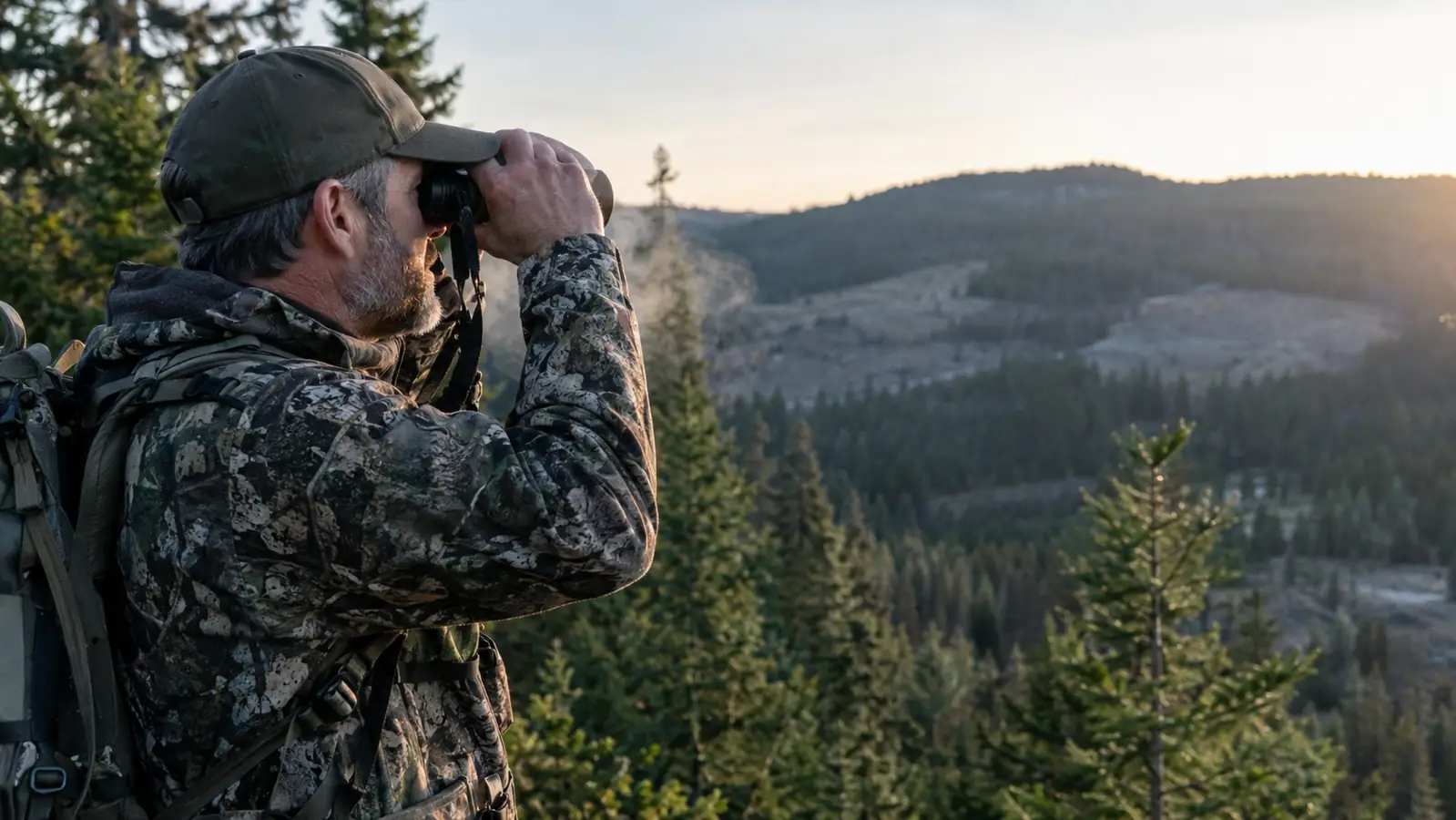
I am Clay Brennan, a county road foreman from outside Sandpoint, Idaho, and I have been hunting whitetail, mule deer and elk on public land for about 35 years. My typical shot is 50 to 300 yards, and my typical glassing session is longer than I want to admit, elbows on my knees, watching a cut until something moves. I bought the Crossfire HD first because it was the responsible choice. Then I borrowed a Triumph HD from a buddy for a week, ordered my own, and ran them side by side until the snow flew.
The better glass, if you want it
The Triumph HD is the pair I reach for on every serious hunt now. Brighter at dusk, sharper at the edges, and it carries the same no-questions Vortex warranty.
Amazon Check Today's Price on Amazon →The Short Answer
The short answer is that the Triumph HD is the better binocular, and the Crossfire HD is the better value. That sounds like a dodge, so let me be more specific. The Triumph HD uses higher-end glass and better coatings, and you can see it in two places: low light and the edges of the view. The Crossfire HD is a perfectly good 10x42 that happens to cost less. If you are the kind of hunter who glasses until legal light runs out, the Triumph is worth the difference. If you are the kind who glasses from the truck window and walks in with the sun up, it is not.
| Vortex Triumph HD 10x42 | Vortex Crossfire HD 10x42 | |
|---|---|---|
| Glass quality | HD glass with dielectric coatings, noticeably brighter at dusk | HD glass with standard coatings, good but a step behind in low light |
| Low-light performance | Keeps detail later into the evening, less squinting at last light | Drops contrast earlier, fine until about 20 minutes before the Triumph |
| Edge sharpness | Sharp across most of the field, minor softness at the very edge | Softens toward the edge sooner, you learn to look through the center |
| Weight | About 24 ounces, noticeable but manageable on a long ridge | About 22 ounces, a touch lighter on the strap all day |
| Price | Costs more, the whole point of this comparison | Costs less, the whole point of this comparison |
| Warranty | Vortex lifetime warranty, same as the Crossfire | Vortex lifetime warranty, same as the Triumph |
| Best for | Hunters who glass hard at dawn and dusk and want the better view | Hunters on a budget who need a solid 10x42 that gets the job done |
Where the Triumph HD Wins
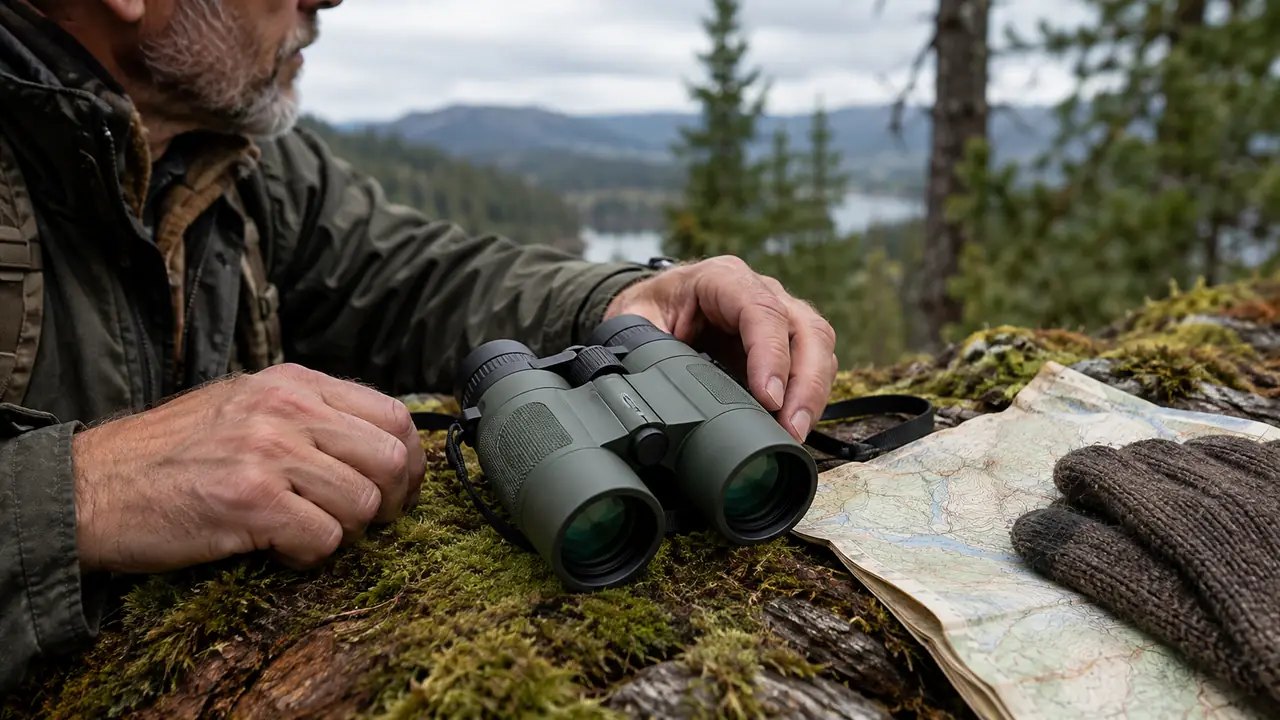
The first thing I noticed was not the center of the view. It was the edges. With the Crossfire HD, I have always had to look through the middle of the glass, keeping the deer in the sweet spot and moving the binoculars to follow. With the Triumph HD, the sweet spot is most of the field. I can hold a cut in view and read the edges without shifting the barrels, which sounds like a small thing until you have done it for four hours on a ridge. It is the difference between glassing and just looking.
Edge sharpness sounds like a snob feature until you are glassing a hillside for a deer that is not standing in the middle of your view. Most of the animals I find are at the edge of the picture, half hidden in brush, and a binocular that stays sharp out toward the rim means I spot them without having to sweep back and forth. On the Triumph HD the softening at the edge is slight. On the Crossfire HD it is noticeable if you look for it, though most first-time buyers would never notice.
The second thing was low light. On the last evening of October I watched a mule deer buck feed out of a timbered draw at what I would call the edge of legal shooting light. Through the Crossfire HD, he was a shape with a vague outline. Through the Triumph HD, I could see the fork on his left side and the way his ears moved when he caught my scent. I did not take the shot, because the light was gone and I know my limits, but I sat there for a minute after he left, just impressed. That is what the extra money buys: minutes of usable light at the end of the day, and the confidence that comes with them.
That evening is the kind of thing a spec sheet cannot tell you. I was sitting on the edge of a cut above a creek bottom, the sun already behind the ridge, and a doe and a young buck came out of the timber at about two hundred and fifty yards. Through the Crossfire I could see two deer. Through the Triumph I could count the points on the buck and see that he was too young to take, and I let him walk. That decision is why a hunter owns good glass at all.
I wanted to put a number on it, so I did a small test in the gravel pit where I sight in. I set up a cardboard target with a white diamond painted on it at the 200-yard berm, then walked back to the truck and glassed it as the light failed on a clear evening in early November. With the Crossfire HD, I lost the diamond at 7:12. With the Triumph HD, I could still make it out at 7:31. That is nineteen minutes, and nineteen minutes is the difference between seeing a buck step out and only hearing him. I ran the same test three evenings in a row and the gap stayed between fifteen and twenty minutes every time. That is not marketing talk. That is what the better coatings do.
The way I ran it was not scientific, but it was honest. I set an old deer target in the shadow of the berm at the gravel pit, roughly two hundred yards out, and went back to it at sunset on three different evenings. Each time I glassed it with one binocular and then the other, switching back and forth, and wrote down the minute I could no longer pick out the vital-zone ring on the target. The Triumph HD gave me that ring several minutes longer on every one of the three evenings. On a hunt, a few minutes at last light is the difference between a buck you can identify and one you have to let walk.
I also checked focus speed, because in the timber you are often glassing at sixty yards one second and three hundred the next. The Triumph focus wheel turns smoothly and does not take many rotations to go from close to far. The Crossfire focus works fine, but it is a little stiffer in the cold, and on one twenty-degree morning I had to work it back and forth before it loosened up.
The pair that earned its place in my pack
After a full season of carrying both, the Triumph HD is the one that comes out of the pack at last light. If you glass the way I do, it is worth the difference.
Amazon Check Today's Price on Amazon →
Where the Crossfire HD Wins
The Crossfire HD wins where most of us actually live: the price. It is the binocular I recommend to a first-time hunter, a dad buying for a kid, or anyone who would rather spend the difference on gas and tags. It is a genuine 10x42 with HD glass, a solid feel, and the same Vortex lifetime warranty that covers the Triumph. I have used mine hard for years, dropped it on rocks, left it in a cold truck overnight, and it has never let me down. For a lot of hunters, that is the whole review.
It also wins on the strap. The Crossfire is a couple of ounces lighter, and over a ten-mile day that adds up. I noticed it most on the long walk out, when the Triumph felt like it was reminding me it was there. Neither pair will break your neck, but if you are the kind of hunter who covers country all day, the lighter pair is the one you will reach for. And honestly, in full daylight, standing in a sunny cut with a deer at 200 yards, I could not tell the two apart. The difference only shows when the light gets honest.
There is one more place the Crossfire HD wins, and it is the one nobody puts on a spec sheet: peace of mind. I loaned mine to my nephew for his first elk hunt in Montana last September, and I did not spend a single evening worrying about it. It got rained on, bounced around in a pack, and sat on a tailgate while we ate sandwiches. It came home with a scratch on the arm and a view that was still clear. That is what a budget binocular is supposed to do. It is not supposed to be the best glass you ever owned. It is supposed to be the one you do not have to think about, and the Crossfire HD is exactly that.
The Crossfire HD also wins on worry. When I carry the less expensive pair, I am not careful with it. It goes on the dashboard, in a pack pocket with a granola bar, on a wet rock beside me while I eat lunch. Glass you are not afraid to use is glass you actually use, and for a lot of hunters that matters more than the last ten minutes of light.
Who Should Buy Which
Buy the Triumph HD if you glass hard at dawn and dusk, if you hunt timber and shadow where the light runs out early, or if your eyes are not what they were at 25 and you want every minute of usable light you can get. Buy the Crossfire HD if you are on a budget, if you mostly hunt with the sun up, or if you would rather put the difference toward gas, tags, or a better pair of boots. Both are honest 10x42s from a company that stands behind them. The Triumph is the better glass. The Crossfire is the better value. You have to decide which one you are.
Buy the Crossfire HD if you hunt mostly in daylight, if you are buying your first real binocular and want to learn how you use one before spending more, or if you need a second pair to keep in the truck for your hunting partner. My wife Deb uses a pair in that exact role, and she has never complained about the view.
One more thing worth saying, because it is the question I get asked most often at the gravel pit: will the Crossfire HD cost you a deer? In my experience, no. I killed a good whitetail buck in 2023 with the Crossfire HD on my chest, and I saw him clearly at 180 yards in decent light. The Triumph HD would not have made that shot any more ethical. What the Triumph gives you is the margin at the edges of the day, the minutes when the light is going and the deer are moving. If you hunt the last hour hard, that margin is worth real money. If you do not, spend it on something else and do not look back.
The other question I get is about magnification. Ten power is the right number for the way most of us hunt in this country. It is enough to tell a forked horn from a spike across a cut at four hundred yards, and it is still steady enough to hold freehand for a minute at a time. If your hands shake more than mine, brace the binocular against a tree trunk or your knees, or put it on a cheap tripod adapter. Either pair here takes one.
My pick for the serious glasser
If you are still reading this, you are probably the kind of hunter who wants the better view. That is the Triumph HD. It earned its place in my pack, and it will earn its place in yours.
Amazon Check Today's Price on Amazon →