
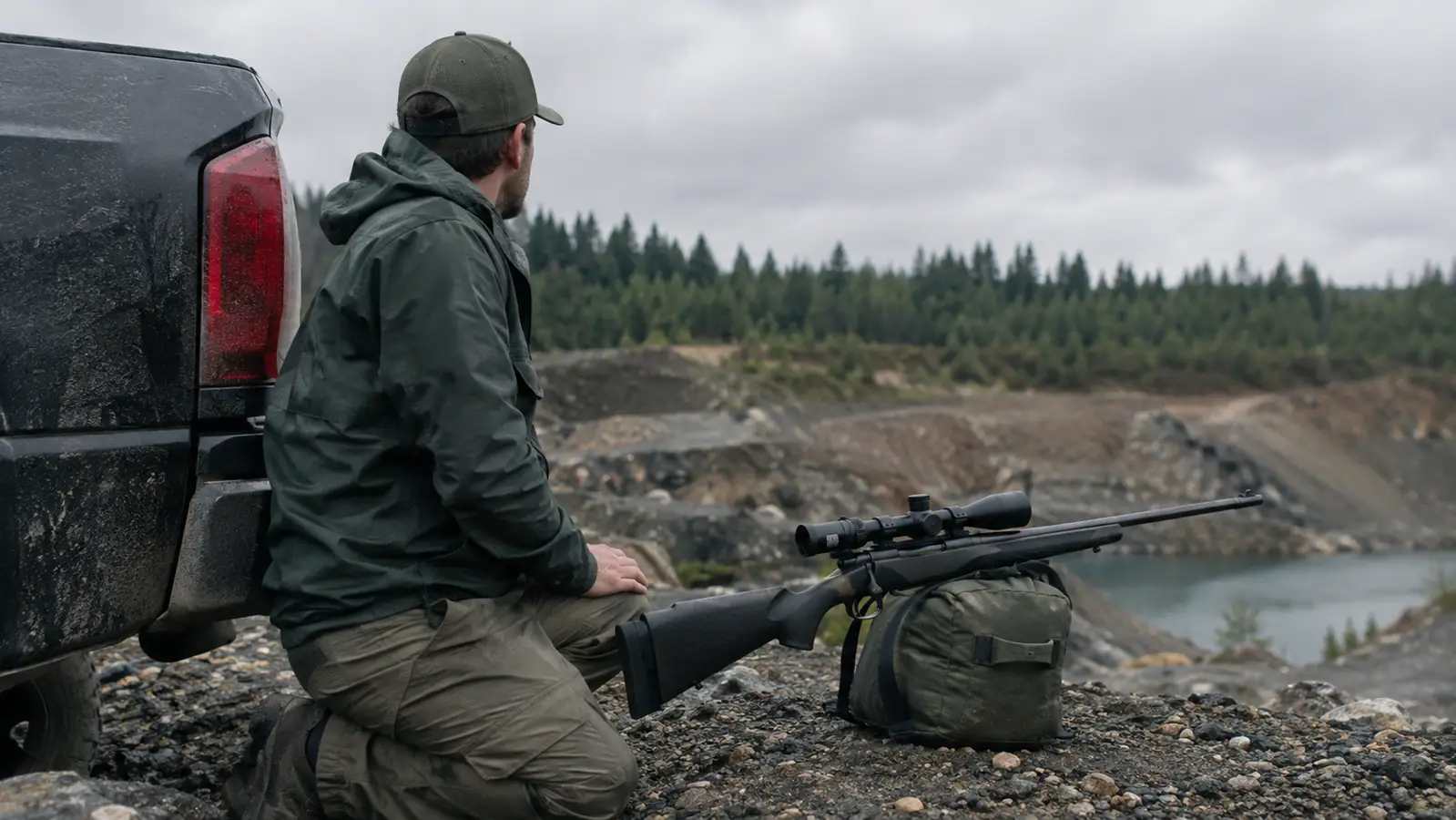
I'll be straight with you. When I ordered a set of Vortex Hunter scope rings for my .308, I did not expect much. The price tag on these things is almost an insult to the word 'precision,' and I've been burned by cheap rings before. A scope that shifts a quarter inch at 200 yards is the difference between a clean kill and a gut-shot elk, and I've seen more than one hunt go sideways because somebody saved twenty bucks on the mount.
So I ran these rings through a full season the way I run everything else: mounted them myself, torqued them to spec, sighted in at the gravel pit, and then hunted with them in rain, snow, and below-zero cold until I either trusted them or threw them in the parts bin. Here's what I found.
The Quick Verdict
For a working hunter on a budget, these rings are the real deal. They held zero through a full season of hard use, the finish has held up better than rings I've paid three times as much for, and the only real complaint is that the included Torx key is too short for comfortable leverage.
Amazon Check Today's Price →A Full Season of Hard Use Says These Rings Hold
I put a full season of rain, cold, and logging-road miles on a set of Vortex Hunter rings and they never let the scope move. If you're mounting a 1-inch tube scope on a working rifle, this is the set I'd start with.
Amazon Check Today's Price on Amazon →How I've Used It
My main rifle is a .308 bolt-action I've carried for years, and it wears a 1-inch tube scope. That's the setup these Vortex Hunter rings are built for, so the fit was about as straightforward as it gets. The rings come in two pieces, a bottom half that clamps to the receiver and a top half that clamps over the scope tube, and the whole thing goes together with four Torx screws per ring.
I mounted them in my shop last October, torqued the base screws to 18 inch-pounds and the cap screws to 15, and then spent a cold morning at the gravel pit range outside town getting the rifle back on paper. The first three-shot group at 100 yards was inside an inch and a half, which told me the rings were at least square enough not to fight the scope. Then I ran a box test: four shots, one in each corner of a one-inch square at 100 yards, and the scope tracked exactly where it should. That's the test that catches a bad mount, and these rings passed it clean.
From there it was a season of real use. Rain on the drive up, the rifle bouncing in a truck rack over logging roads, a hard fall on a slick hillside in November, and a week of single-digit cold in western Montana. I checked zero before the elk hunt, after the elk hunt, and again in January. The point of impact never moved. Not a quarter inch, not an eighth. It stayed exactly where I left it.
What These Rings Actually Are
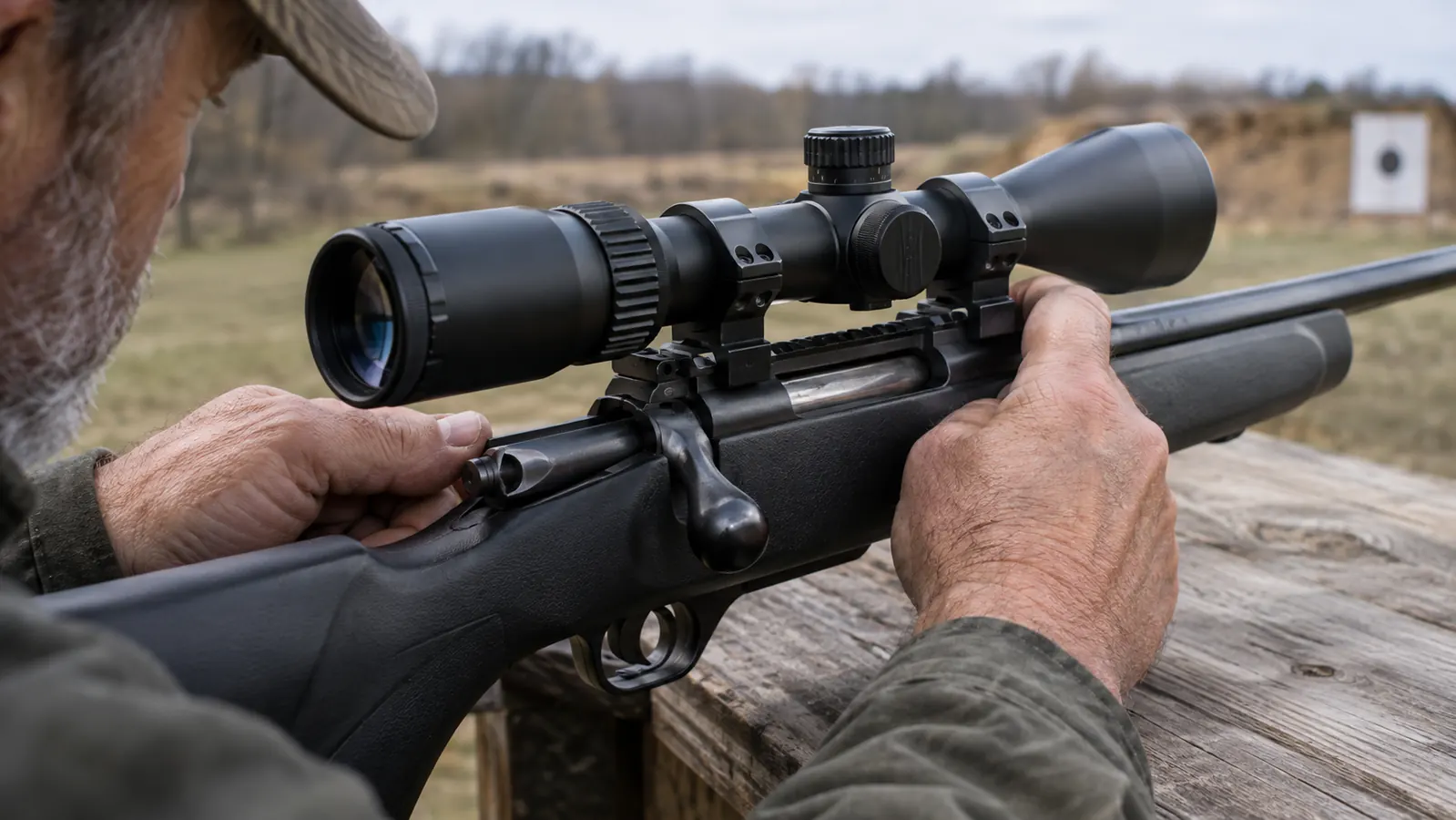
The Vortex Hunter is a two-piece steel ring set with a matte black finish, and it's about as simple as a scope mount gets. There's no quick-detach lever, no cantilever base, no recoil lug. Just four screws, two rings, and a solid clamp. That simplicity is the point. Fewer parts means fewer things to come loose, and after a season of use I can tell you these rings have not come loose.
The rings are machined steel rather than aluminum, which matters on a rifle that gets knocked around. Aluminum rings save weight, but they also dent and shift under a hard impact. Steel bends less, and on a hunting rifle that lives in a truck rack, I'll take the extra few ounces for the peace of mind. The finish is a matte black that has held up well. After a season of rain, snow, and gun oil, there's not a spot of rust on them.
One thing worth knowing: these are 1-inch rings, and they come in medium height. If your scope has a 30mm tube, or if you need extra-low or high rings to clear a big objective bell, you'll want to measure before you order. The medium height cleared the bolt handle and the objective bell on my setup with room to spare, but every rifle is a little different.
The Torque Question
The single biggest reason scope rings fail is that somebody over-tightens or under-tightens the screws. Too loose and the scope slides in the rings under recoil. Too tight and you crush the tube or strip the threads. The Vortex Hunter rings have a sensible torque spec printed in the box, and if you follow it, they work.
I have seen it happen more than once at the gravel pit outside town. A hunter shows up the week before season with a brand-new scope, cranks the ring screws down as hard as a screwdriver will go, and then cannot figure out why his groups wander. Over-tightening can dent or slightly crush a one-inch tube, and once that happens the internal adjustments can stick or jump. The rings are not the problem in that story. The hand on the screwdriver is.
I used a torque wrench because I have one, but you can get by with a good inch-pound driver. The included Torx key is the one weak point of the whole package. It's short, which makes it hard to get good leverage, and the handle is thin enough that it digs into your palm. I replaced it with a proper T-handle Torx driver after the first mount, and I'd recommend you do the same.
The other thing to watch is the order of operations. The base screws should be snugged down first, then the cap screws over the scope tube, and you want to alternate side to side so the ring clamps evenly. If you just crank one screw all the way down and then the other, you can pull the ring out of square and introduce a cant that shows up as a shift at distance. Take the extra two minutes and do it right.
Here is the order I follow, and I have done it the same way for years. Base screws first, to spec, with a drop of the removable thread locker. Then the bottom halves of the rings onto the base. Then the scope in, set for eye relief with the rifle shouldered in a normal hunting stance, not hunched over a bench. Then the reticle leveled. Only then do the ring caps go on, and I tighten them in a crisscross pattern a little at a time, the way you would put a tire on a truck, so the gap between the cap and the base stays even on both sides.
The even gap matters more than people think. If one side of a ring cap is snugged all the way down and the other side has a visible gap, the ring is pinching the tube unevenly. That can bend the tube just enough to bind the adjustments, and you will not find out until the day your turrets stop tracking. I check the gap with my eye and, if I am unsure, with a strip of paper.
How They Held Up Over a Season
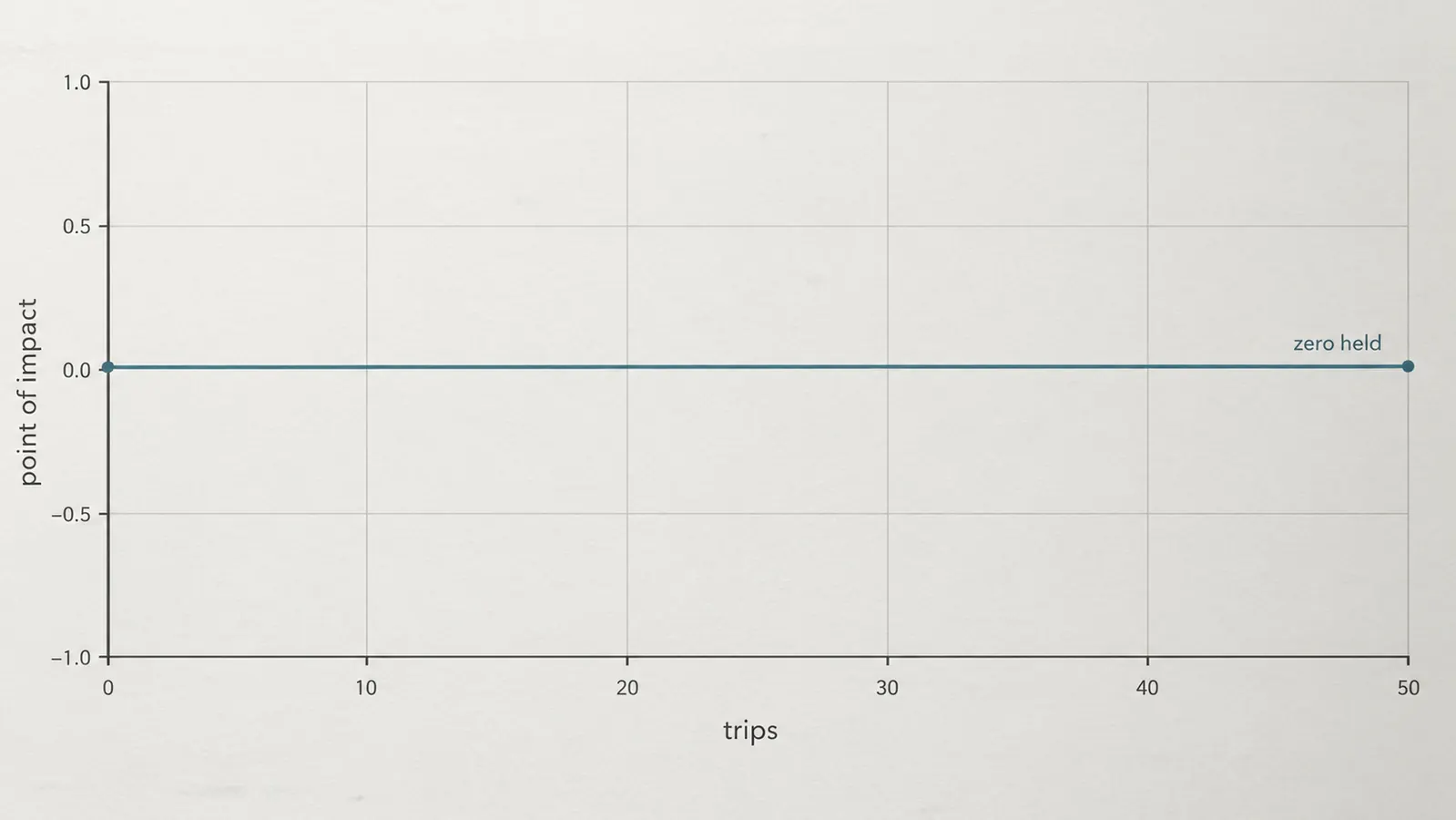
The real test of a scope ring is not how it looks in the store. It's whether the scope stays put when the rifle gets knocked around, soaked, and frozen. I put these rings through all of that, and the point of impact never moved. I checked zero before the elk hunt, after the elk hunt, and again in January. Same hole, every time.
My first real check came the second week of the deer season. I had been hunting a logging cut east of Sandpoint for four mornings straight, leaving the rifle in the truck overnight in temperatures that dropped into the low twenties, then carrying it out in the warm afternoon. That swing in temperature is hard on anything that clamps to anything else, because steel and aluminum grow and shrink at different rates. I set up a target at 100 yards at the gravel pit on the Saturday and fired a single cold shot. It landed half an inch from the point of aim, right where it had been in October.
Then came elk. I hunted western Montana for a week in November, in snow most days, and the rifle took a fall when I slipped on a frozen log and went down on my side with the scope underneath me. I was sure I had knocked it off. Back at camp I set a paper plate at a measured 100 paces and shot it twice. Both rounds landed together, close enough to the center that I did not touch a turret. I attribute that more to the rings than to the scope, because the scope can only stay where the rings hold it.
The finish has held up better than I expected. After a season of rain, snow, and gun oil, there's not a spot of rust on them. The matte black is still matte black, and the screws still look like new. I've had rings that started to show wear after a single wet hunt, and these aren't those.
The only thing I'd change is the included Torx key. It's short, which makes it hard to get good leverage, and the handle is thin enough that it digs into your palm. I replaced it with a proper T-handle driver after the first mount, and I'd recommend you do the same. It's a small thing, but it's the difference between a pleasant afternoon in the shop and a frustrating one.
I will add one practical note on the key. The Torx bit that fits these screws is a common size, and I bought a separate bit for my torque driver so I never had to use the little included key on the ring caps at all. I keep the included key in a pocket of my rifle case for the field, in case I need to snug something up in camp, and it lives there with a short length of electrical tape and a lens cloth.
What I Liked
- Held zero through a full season of rain, snow, and logging-road miles
- Machined steel construction that shrugs off hard impacts
- Matte black finish that has not rusted or worn after months of use
- Simple two-piece design that is easy to mount and torque to spec
- Genuinely affordable for the quality
Where It Falls Short
- Included Torx key is too short for comfortable leverage
- 1-inch medium height only, so 30mm tubes and some objective bells need a different set
- No quick-detach option if you want to swap scopes between rifles
I checked zero before the elk hunt, after the elk hunt, and again in January. The point of impact never moved. Not a quarter inch, not an eighth.
Who This Is For
These rings are for the hunter who wants a solid, dependable mount without spending a paycheck. If you're mounting a 1-inch tube scope on a bolt-action or a lever gun, and you want something that will hold zero in cold rain without breaking the bank, the Vortex Hunter rings are a great fit. They're also a great choice for a first scope mount, because the simple design makes it hard to mess up the install.
They're also for the hunter who likes to do their own work. The two-piece design is about as straightforward as it gets, and the torque spec is printed right in the box. If you can turn a screwdriver, you can mount these rings. And if you can follow a torque spec, you can mount them right.
That is me. I like knowing every screw on my rifle has been turned by my own hand and checked with my own torque driver. When something goes wrong in the field, I want to know whether it was the gear or me, and doing my own mounting is how I find out. If you would rather have a gunsmith do it, these rings are still a good choice, because they are simple and there is not much a shop can do wrong with them.
Who Should Skip It
If your scope has a 30mm tube, or if you need extra-low or high rings to clear a big objective bell, these aren't the rings for you. The Vortex Hunter comes in 1-inch medium only, and while that covers a lot of hunting scopes, it doesn't cover everything. Measure your setup before you order.
The same goes for anyone mounting a scope with an unusually large objective. A 50mm or bigger bell on a low-slung barrel may not clear medium rings, and forcing it means either the bell touches the barrel or you end up with a scope that sits so high you lose a solid cheek weld. Measure before you order. It takes five minutes with a ruler and saves a return.
And if you're the kind of shooter who wants to swap scopes between rifles at the range, you'll want a quick-detach mount instead. These rings are meant to go on and stay on. That's not a flaw, it's just a different job.
The Rings I'd Put on a Working Rifle
After a full season of hard use, I trust these rings. If you're mounting a 1-inch tube scope and you want something that holds zero without costing a fortune, this is the set I'd buy again.
Amazon Check Today's Price on Amazon →